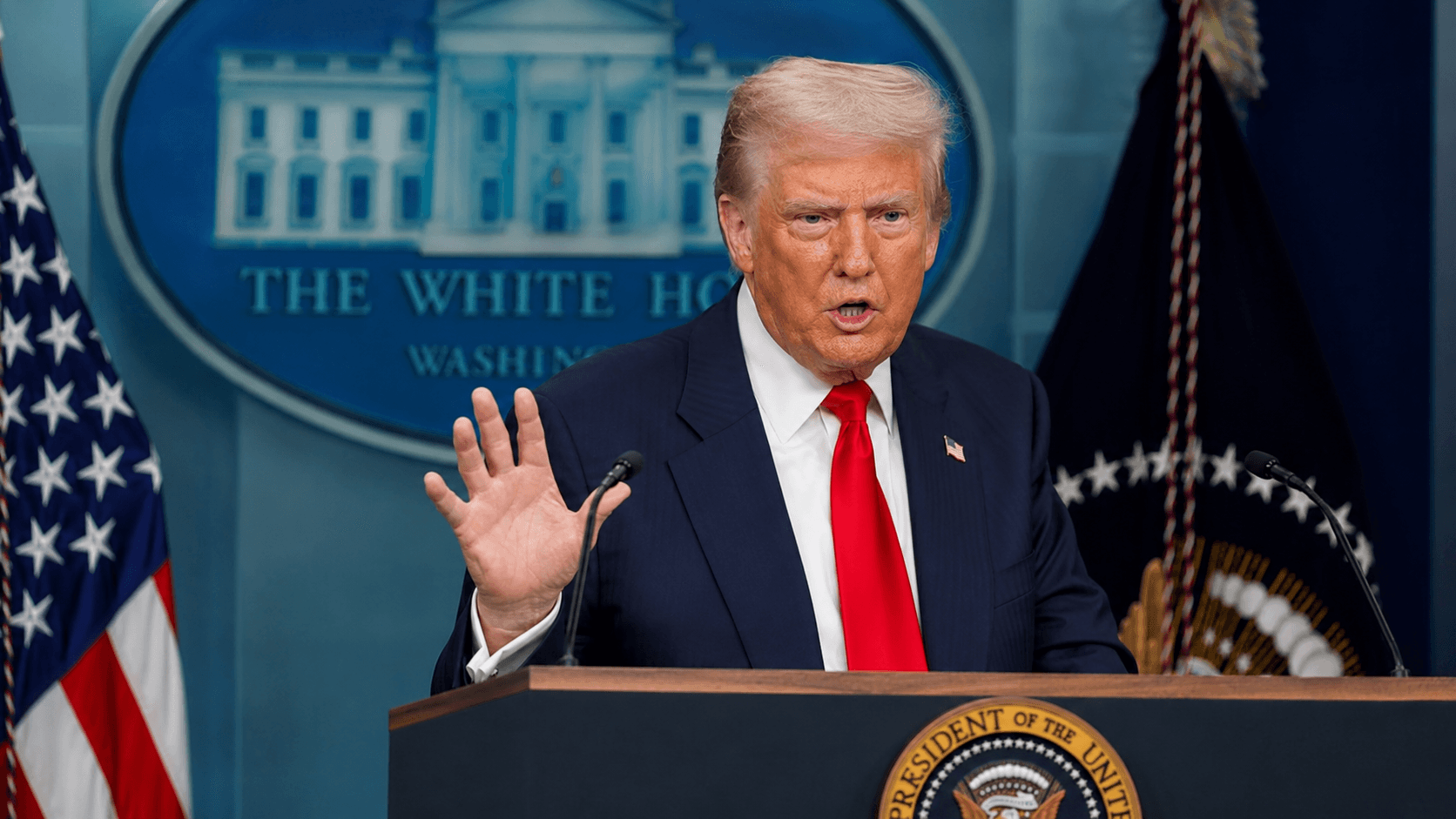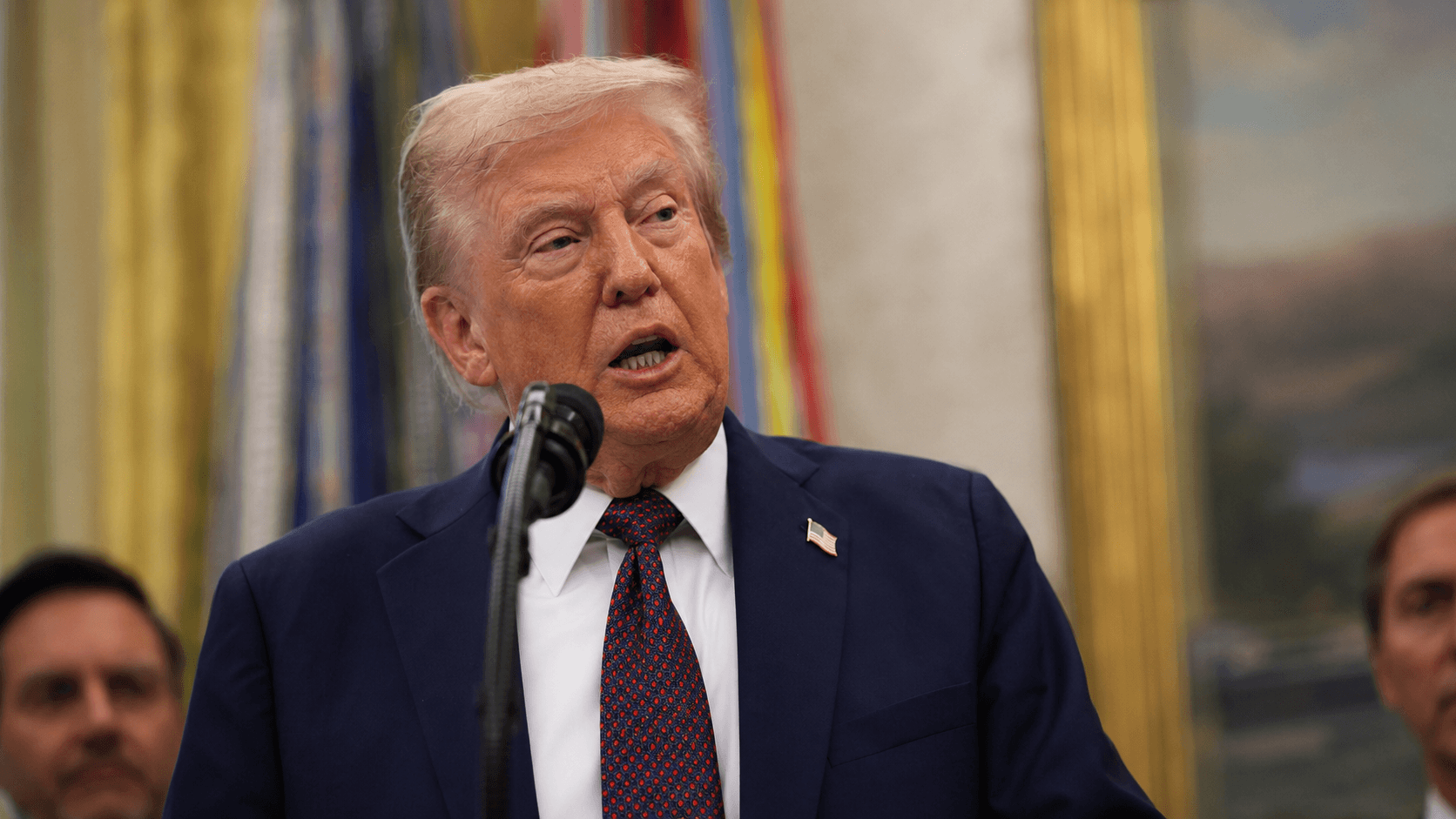
President Donald Trump signed an executive order on Tuesday asking frontier AI developers to voluntarily submit new models to the federal government for testing 30 days before public release. The window is a third of the 90 days called for in an earlier draft, and lands closer to the two-week review period AI companies had lobbied for. The order also explicitly forbids the creation of any mandatory federal licensing or preclearance regime for AI models, locking in a voluntary posture at the executive level.
The signing closes a roughly two-week standoff between the White House and the AI industry. Trump had been scheduled to sign a tougher version in late May with a roster of Silicon Valley CEOs in attendance, but delayed after pushback led by venture capitalist and former White House AI czar David Sacks. The president said at the time he did not want to slow US AI firms competing against China. The narrower order was ultimately signed privately, without the planned Silicon Valley photo op.
Beyond the pre-release review request, the order directs the Department of Justice to treat AI-assisted hacking and unauthorized computer access as a high-priority enforcement area. That language gives prosecutors a clearer mandate to pursue cases involving model-assisted intrusions, a category that has grown alongside the spread of coding agents and autonomous tooling. It does not, however, create new criminal statutes — the existing computer-fraud framework applies.
Key facts
- 01Trump signed the order Tuesday, June 2, asking AI companies to voluntarily submit new models for federal review 30 days before public release.
- 02An earlier draft called for 90 days of advance review; AI industry voices had pushed for a window closer to two weeks.
- 03The order explicitly bars any mandatory licensing, preclearance, or permitting regime for frontier AI models.
- 04The order directs the Department of Justice to treat AI-assisted hacking and unauthorized access as a high-priority enforcement area.
- 05Trump had planned to sign a stricter version in late May surrounded by Silicon Valley CEOs but ended up signing the narrower version privately.
The carve-out against mandatory rules is the most consequential line in the text for AI labs:
“Nothing in this section shall be construed to authorize the creation of a mandatory governmental licensing, preclearance, or permitting requirement for the development, publication, release, or distribution of new AI models, including frontier models”— Donald Trump, President of the United States
That sentence effectively forecloses the licensing approach that some policy researchers and a handful of lawmakers had pushed during the prior administration. For OpenAI, Anthropic, and other frontier labs, it means the federal compliance burden on new model launches remains a request, not a gate. The 30-day voluntary window is shorter than what safety advocates wanted and longer than what industry preferred — a split that mirrors the broader fight inside the White House over how much friction to introduce ahead of a model release.
This is Trump's second AI executive order. In December 2025, he signed an order directing the development of a single national AI policy framework intended to preempt state-level AI laws — the so-called "one rulebook" approach. Tuesday's order layers on top of that framework, focusing specifically on pre-deployment evaluation and law enforcement priorities rather than the federal-versus-state question.
AI Chat Daily reported last week on the internal White House factions clashing over the pre-release review provisions, with Sacks and allied investors arguing that even a voluntary 90-day window would function as a de facto choke point on US model launches. The compressed 30-day window appears to be the compromise that got the order across the line. Anthropic, which has publicly supported pre-deployment testing regimes, is among the labs most likely to engage with the voluntary process; the company's recent Claude Mythos vulnerability work already involves coordinated red-teaming with outside partners.
The order leaves several mechanics undefined. It does not specify which federal body conducts the evaluations, what tests apply, or what happens if a lab declines to submit a model — though by the order's own terms, nothing happens, because participation is voluntary. It also does not address open-weight releases, where the "submit 30 days before release" framing maps poorly onto how distribution actually works once weights are public. Industry attorneys will spend the next several weeks pressing for clarity on each of those gaps.
Skeptics inside the safety community will note that voluntary submission with no enforcement mechanism is, in practice, an honor system, and that the labs most likely to skip it are the ones least likely to invest in pre-release red-teaming on their own. Skeptics on the other side will note that even a 30-day voluntary window invites mission creep, and that today's request can become tomorrow's expectation. Both critiques are real; the order does not resolve either.
For the AI market, the practical takeaway is that the federal pre-release posture in the US is now settled for the near term: voluntary, 30 days, no licensing. That is a meaningfully lighter touch than the regulatory architecture taking shape in the EU, and it gives US frontier labs a clearer runway to ship through 2026 without the threat of a federal gating regime. Whether Congress eventually overrides that posture with statute is a separate question — but absent that, the competitive calculus for OpenAI, Anthropic, and their peers just got a little simpler.

Working on something we should cover, or seeing a story we missed? Send leads, documents, or feedback to hello@aichatdaily.com. For sensitive tips, see our secure tips page for Signal and PGP options.
Spotted an error? Email hello@aichatdaily.com with the URL and the issue, or read our full corrections policy.