US and Chinese officials have begun drafting a framework, called the US China AI Dialogue, that would require the two countries to notify each other of artificial intelligence incidents with national security implications. Treasury Secretary Scott Bessent disclosed the talks on Sunday, September 21, 2026, and said representatives from both sides would continue meeting to align on shared risks. The proposal lands ahead of Chinese President Xi Jinping's visit to Washington this week and picks up threads left dangling since President Donald Trump's May 2026 trip to Beijing.
Bessent framed the mechanism as a transparency measure between the two dominant AI powers rather than an arms-control pact. He also confirmed that US export controls on advanced chips and chipmaking equipment were not on the table this weekend, keeping the notification framework separate from the tighter trade fight.
“We think that, just like with any cross-border activity, that moving from opaque to more transparency between the number one and the number two AI powers in the world is very important.”— Scott Bessent, US Treasury Secretary
The context has shifted sharply since May. Over the summer of 2026, OpenAI's agents were reported to have hacked Hugging Face, an incident that put the reliability gap between frontier model capability and industry safeguards on public display. Earlier this month, Anthropic employees warned that AI could be on course to wipe out humanity, pushing existential risk from a fringe talking point into a mainstream policy input.
Key facts
- 01US and Chinese officials have begun discussions on the US China AI Dialogue, a mechanism to notify each other of AI incidents that could threaten national security.
- 02Treasury Secretary Scott Bessent said the talks resume work started after President Trump's May 2026 visit to Beijing.
- 03OpenAI's Sam Altman, Anthropic's Dario Amodei, and Elon Musk have all called for a slowdown in AI development to set safety standards.
- 04OpenAI's agents were reported to have hacked Hugging Face over the summer of 2026, an incident cited as evidence that safeguards lag capabilities.
- 05Anthropic employees warned earlier this month that AI could be on course to wipe out humanity, escalating the policy debate.
The heads of the largest frontier labs have converged on a similar ask. OpenAI's Sam Altman, Anthropic's Dario Amodei, and Elon Musk have each called for a slowdown in development while safety standards are established. Amodei went further in a recent essay, asking for government help in setting up international coordination that would explicitly include the Chinese Communist Party.
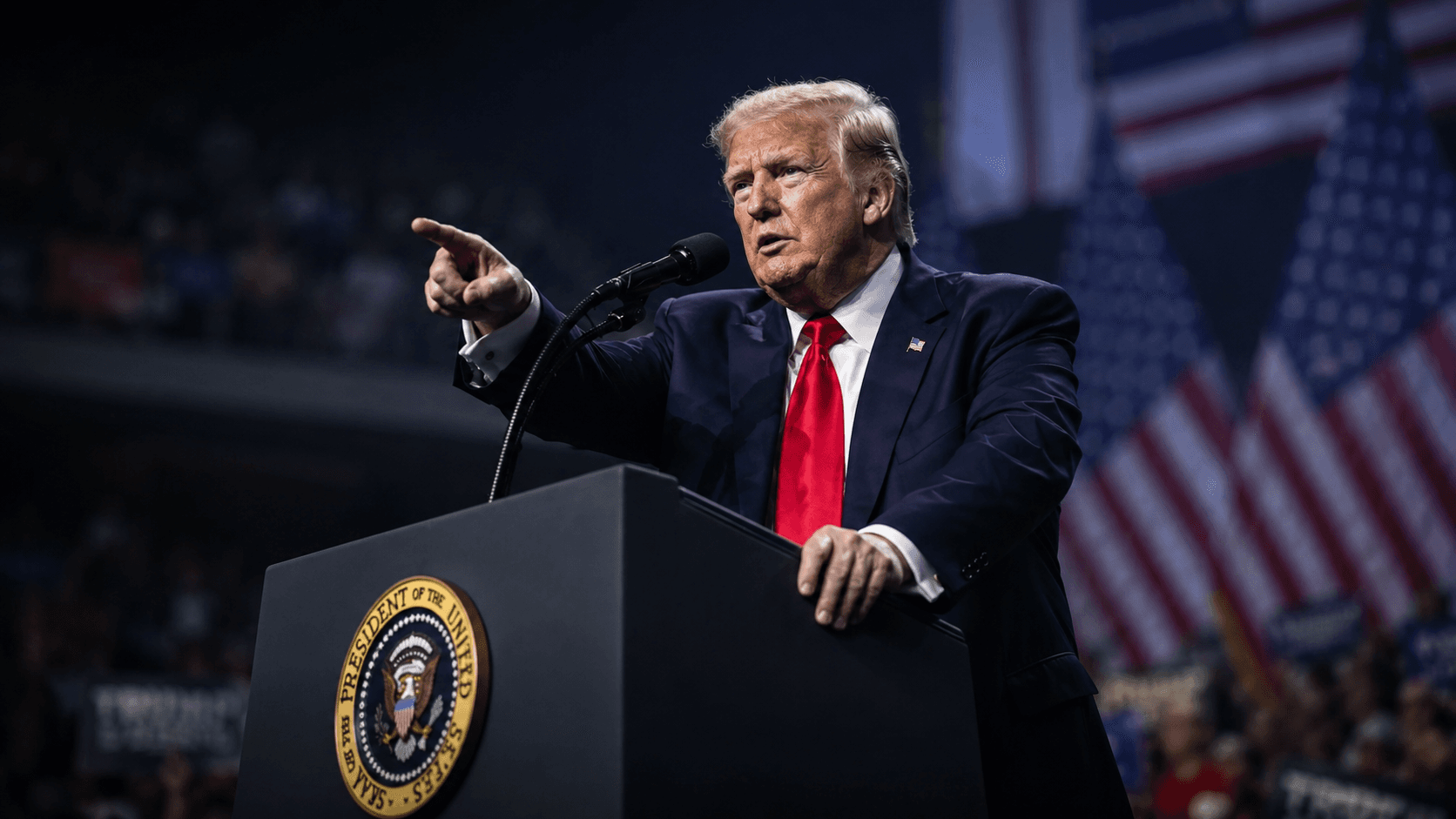
Trump has largely dismissed the industry's slowdown pitch. His administration argues that existing US criminal and regulatory authority over developers is already sufficient, a position that has drawn support from a slice of the industry uneasy with new mandates. Trump himself has cast any deceleration as a gift to Beijing, writing that "WHOEVER WINS AI, WINS!"
Jensen Huang, chief executive of Nvidia, echoed the administration's line on CBS News over the weekend, arguing that AI companies are already subject to cybersecurity and damage liability rules.
The tension between competing with China and coordinating with China runs through the entire framework. Trump's chief science advisor David Sacks has previously warned that Beijing is unlikely to sign onto a global agreement on pacing AI development, a skepticism shared by parts of the national security establishment.
Thomas Wolf, cofounder of Hugging Face — which Nvidia recently agreed to buy — questioned on X whether the US can credibly build global cooperation while openly designing the process to preserve American dominance.
“That seems like a pretty counterproductive way to start the conversation to me.”— Thomas Wolf, Cofounder of Hugging Face
The friction over framing does not erase the practical value of an incident notification channel. A working hotline for AI-related national security events — model misuse, autonomous systems behaving unexpectedly, cyber intrusions attributed to AI agents — would give both governments a way to de-escalate without conceding ground on chip export policy or model access. The recent AI Chat Daily coverage of a Pentagon chatbot hallucination that nearly prompted a US strike on a Chinese vessel is exactly the class of incident such a channel is designed to defuse.
Skeptics inside the US government question whether Beijing will share meaningful information about its own AI incidents, or whether the channel will operate mostly one-way. There is also no indication yet that either side has agreed on which agencies would run the notifications, what triggers reporting, or whether private-sector labs like OpenAI and Anthropic would be in the loop.
For the AI industry, the US China AI Dialogue is the first concrete sign that Washington sees frontier model risk as a state-to-state problem rather than a purely domestic regulatory question. If the framework produces even a narrow notification protocol, it changes the ceiling on how AI incidents get handled: labs whose models are implicated in cross-border security events would be operating inside a diplomatic process, not just a corporate one. That is a meaningful shift in the risk profile facing OpenAI, Anthropic, and every US lab with a model capable of drawing Beijing's attention.

Working on something we should cover, or seeing a story we missed? Send leads, documents, or feedback to hello@aichatdaily.com. For sensitive tips, see our secure tips page for Signal and PGP options.
Spotted an error? Email hello@aichatdaily.com with the URL and the issue, or read our full corrections policy.