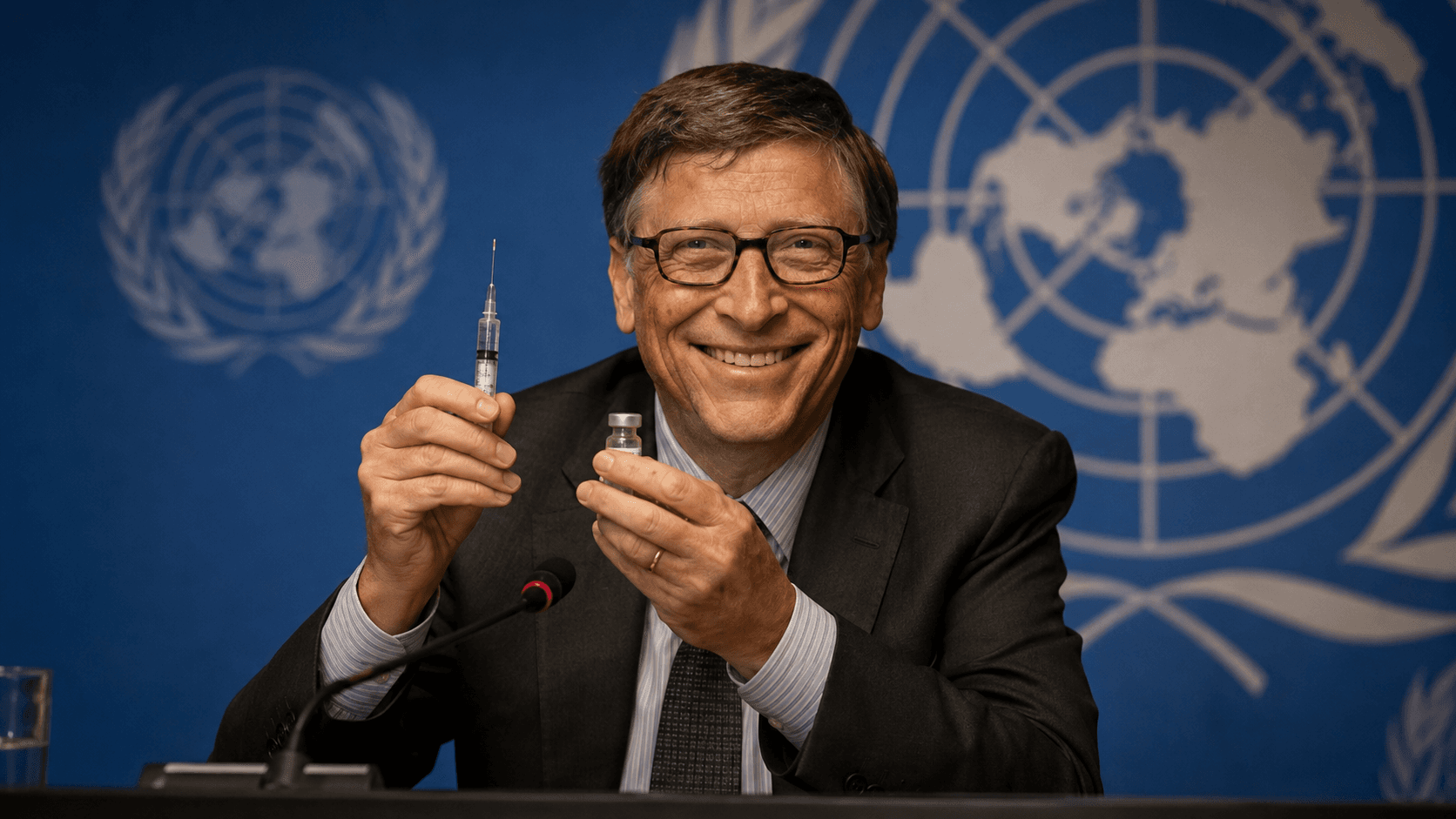
Bill Gates says AI has already crossed the danger thresholds the industry once promised to stop at, and he is publishing a memo and sitting for interviews to say so. The 70-year-old former Microsoft CEO argues that bio-capabilities, cyber-capabilities, psychosocial manipulation, job-market destruction, and loss of control have all moved past the lines that were supposed to trigger a serious policy response. He rates bioterrorism risk at roughly 50 times more likely than a natural pandemic risk. And he estimates that 50% of the job market consists of well-defined roles where AI is already cheaper and better than the humans doing them.
Speaking from the Gates Ventures offices in Kirkland, Washington, overlooking Carillon Point Marina and Lake Washington, Gates told MIT Technology Review that his alarm is driven by two things: the thresholds themselves, and the silence outside the AI industry about them. He says the guardrails that were supposed to arrive at this stage — controls on who can use frontier models, restrictions on model copying, monitoring of dangerous capabilities — have not materialized at the pace the capabilities have.
“We've crossed the threshold in terms of [AI's] bio-capabilities, cyber-capabilities, psychosocial capabilities, job-market-destruction capabilities, and even the lack of control.”— Bill Gates, Gates Foundation co-chair and former Microsoft CEO
The bio warning is the sharpest. Gates says any model capable of designing novel molecules should be monitored as a matter of policy, not left to voluntary lab-by-lab discretion. His 50-times figure on bioterror is not a throwaway line; it is the number he uses to argue that a bad actor with a frontier model is a more probable pandemic vector than nature itself. That is a claim with direct implications for how governments treat model weights, API access, and export controls on cutting-edge systems.
Key facts
- 01Gates says AI has already crossed the thresholds society said would trigger action on bio, cyber, psychosocial, job-market, and control risks.
- 02He rates bioterrorism risk at roughly 50 times more likely than a natural pandemic risk, and calls for monitoring any model that can design novel molecules.
- 03Gates estimates 50% of the job market consists of well-defined roles where AI is already cheaper and better than humans.
- 04He proposes human-reserved job categories and taxes on robots and tokens to redistribute AI-driven productivity gains.
- 05The Gates Foundation funds Biomni, a Stanford biotech AI research agent, and spun off NextLadder to help low-income households navigate bureaucracy with AI.
On jobs, Gates breaks with his own past speeches. He acknowledges he has previously given the standard talk — no prior technology has produced net job losses — and now says that framing is misleading. When AI can substitute for human cognition across a wide slice of white-collar work in the same time frame at modest cost, with error rates likely below human rates, the historical analogy stops holding. He points to early signals of firms hiring fewer entry-level workers, and to robotics progress in China and the United States as the second leg of the substitution.
He carves out the exceptions carefully. Warren Buffett, Gates notes, has been doing reinforcement learning on the value of businesses since age 13 — over 80 years of implicit judgment that was never recorded and cannot be easily encoded into a model. Roles that depend on that kind of tacit collaborative knowledge are, for now, safe. Telesales, telesupport, and month-end accounting closes are not.
“I view bioterrorism risk, versus a natural pandemic, as about 50 times more scary, more likely than a natural pandemic risk.”— Bill Gates, Gates Foundation co-chair
Gates is dismissive of the current shape of public opposition. Protesting a data center in the United States, he argues, does nothing about the underlying risks he is describing, because data centers will be built globally regardless. He compares it to yelling at an oil company executive as a strategy for solving climate change — emotionally satisfying, strategically empty. His preferred targets are policy interventions: monitoring of dangerous model capabilities, human-reserved job categories that nations define for themselves, and taxes on robots and tokens that redirect AI-generated productivity gains toward displaced workers.
The optimism, such as it is, sits alongside the warnings. Gates points to the Gates Foundation's work on vaccines and drugs, its participation in public-domain protein and cell modeling efforts, and its funding of Biomni, a biotech AI research agent at Stanford. He highlights NextLadder, a Gates Foundation spinout aimed at helping low-income households navigate eviction, bankruptcy, reentry from incarceration, and the maze of government and nonprofit assistance — the kind of bureaucratic complexity where an always-available AI agent can materially change outcomes for people who cannot afford human advisors.
He is under no illusion about how the productivity math lands for employers. Any well-defined job, he says flatly, is now cheaper and better done by AI. Implementations fail when data is bad or the deployment is rushed, but those are tractable engineering problems, not a durable moat for human labor. The white-collar substitution he describes is not a decade-out forecast; it is a rollout already underway.
“Any job that's well defined, the AI is cheaper and better.”— Bill Gates, Gates Foundation co-chair
The counterweight to Gates's framing is that he is a philanthropist with a foundation position and no fiduciary duty to a frontier lab. Frontier developers argue that capability monitoring is already happening internally, that model release decisions do factor in bio-risk evaluations, and that jobs displacement estimates have historically overshot. Gates himself concedes the industry does not like criticizing itself or its peers, which is part of why he is choosing to be, in his own words, the shrillest voice. Whether the specific 50-times bioterror multiplier holds up to formal risk analysis is a question the biosecurity research community has not settled.
The signal worth taking from Gates is less any individual number and more the shift in who is saying what. When the co-founder of Microsoft — a company whose fortunes are tied to the Copilot and OpenAI relationship — publishes a memo arguing the guardrails have failed and proposes robot taxes and human-reserved jobs, the Overton window on AI policy moves. Expect the human-reserved-jobs concept and token taxes to surface in policy drafts within the next year, and expect frontier labs to face sharper questions about novel-molecule capabilities the next time a model release lands. Gates has spent decades being early on both software and pandemics. This memo is a bet that he is early on the third one.

Working on something we should cover, or seeing a story we missed? Send leads, documents, or feedback to hello@aichatdaily.com. For sensitive tips, see our secure tips page for Signal and PGP options.
Spotted an error? Email hello@aichatdaily.com with the URL and the issue, or read our full corrections policy.