Alibaba is preparing a $10 billion share placement in Hong Kong to fund AI spending, a raise that would rank among the largest secondary equity offerings on the exchange this cycle. The proceeds are earmarked for AI infrastructure and model development, the areas absorbing the fastest-growing share of Chinese hyperscaler capex.
The $10 billion figure puts Alibaba in the same order of magnitude as the multi-billion-dollar infrastructure commitments already announced by US frontier labs and their compute partners. It also confirms what Alibaba's recent moves have signaled: cloud and AI, not e-commerce, are now the strategic priority.
The company has been steadily rebuilding its cloud unit around AI workloads. Its Qwen open-weight model family has become one of the most-downloaded model lines outside the US labs, and its cloud arm has become the default training and inference backbone for a large share of Chinese AI startups. Both efforts require capital at a scale that operating cash flow alone will not fund on the timeline Beijing's AI race demands.
Key facts
- 01Alibaba is preparing a $10 billion share placement in Hong Kong to fund AI spending.
- 02The raise would rank among the largest secondary equity offerings on the Hong Kong exchange this cycle.
- 03Proceeds are earmarked for AI infrastructure and model development capex.
- 04The move follows Alibaba's push into China's Ulanqab data center hub, which has 12.5GW of pledged capacity.
The placement structure — a Hong Kong-listed secondary offering rather than a US-linked instrument — matters. It keeps the capital raise inside the mainland-adjacent market, sidesteps the political friction of a New York issuance, and taps a Hong Kong investor base that has been actively looking for Chinese AI exposure since the DeepSeek moment reset foreign perceptions of Chinese model quality earlier this year.
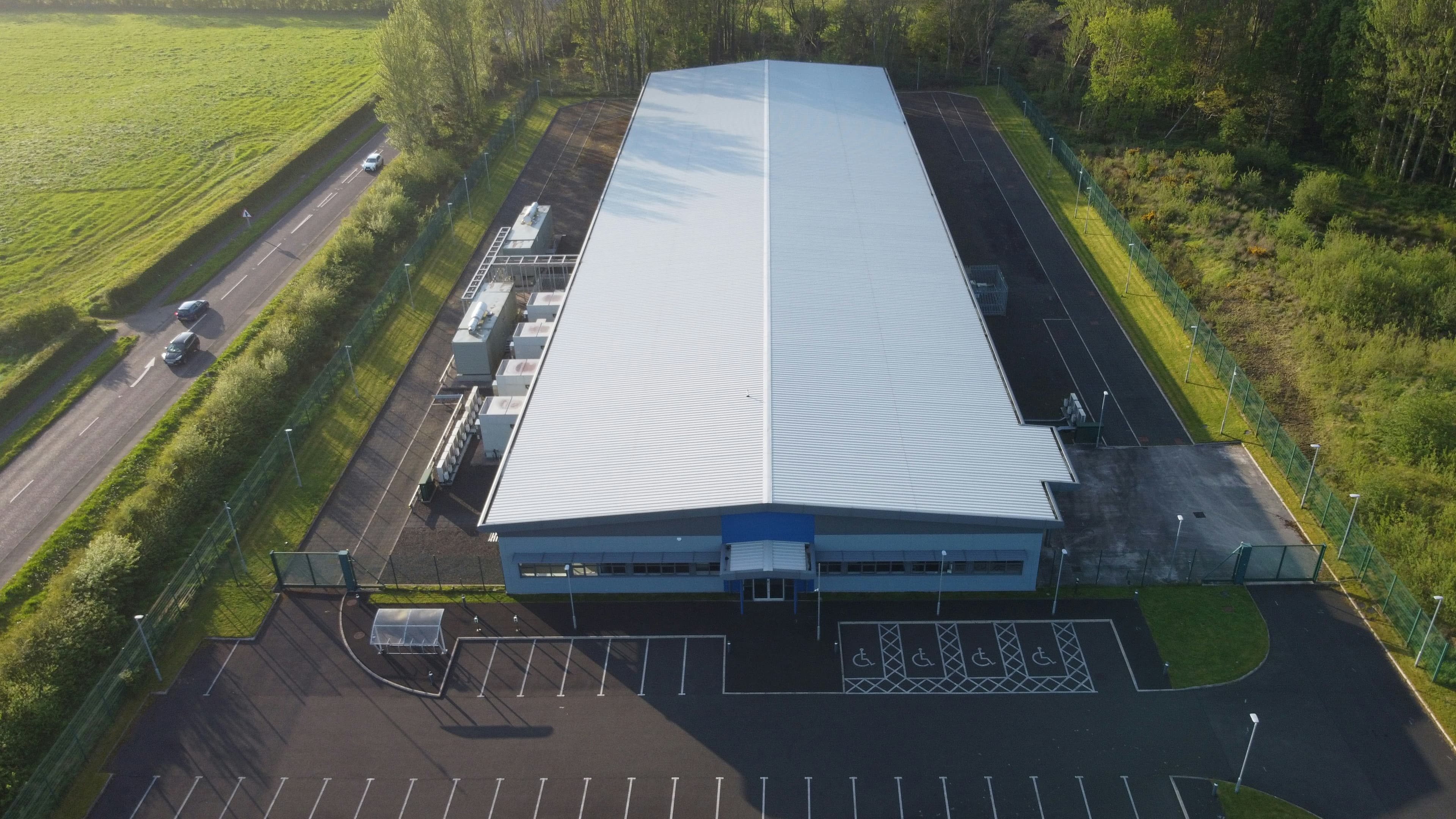
The spending target lines up with a broader Chinese buildout. Alibaba, ByteDance and DeepSeek are among the anchor tenants pushing capacity into Ulanqab, the Inner Mongolia data center hub that now has 12.5GW of pledged compute capacity, as we covered in recent reporting on China's AI infrastructure race. A $10 billion war chest would meaningfully accelerate Alibaba's slice of that footprint.
The comparison to US peers is unavoidable. OpenAI, Anthropic and Google have each disclosed multi-year infrastructure commitments in the tens of billions, financed through a mix of equity, debt, and compute-partner arrangements with Microsoft, Amazon, and Nvidia. Alibaba is doing the same math but with fewer external partners to lean on — which is precisely why a public equity raise this large makes sense.
Dilution is the trade-off. Existing shareholders will absorb the cost of funding a capex cycle whose returns land over multiple years, in a market where Chinese cloud pricing is under pressure and where the payoff from AI investment is still more visible in developer adoption than in operating income. Alibaba is betting that scale bought now will look cheap by the time inference demand catches up to training capacity.
The raise also carries a signaling function. A $10 billion equity print from China's largest cloud operator tells Beijing, competitors, and the model-development ecosystem that Alibaba intends to stay in the frontier tier through the next hardware cycle, not concede it to state-linked entrants or to ByteDance. It is the kind of number that reshapes the assumptions rivals make about their own funding plans.
The risks are real. Chinese cloud revenue growth has been uneven, export controls continue to constrain access to the most advanced Nvidia silicon, and the timing of Alibaba's return on AI capex depends on domestic chip supply and Qwen's continued competitiveness against both US frontier models and DeepSeek's open-weight releases. A $10 billion bet on infrastructure only pays off if the workloads show up to fill it.
For the AI market, Alibaba's placement is the clearest signal yet that the capex arms race is not a US-only phenomenon. The dollar figures on both sides of the Pacific are converging, the financing mechanisms are diverging — equity in Hong Kong, debt-and-partner deals in the US — and the competitive frontier is being priced in real time by public markets. That is a healthier structure for the industry than one where a handful of private balance sheets carry the entire buildout.

Working on something we should cover, or seeing a story we missed? Send leads, documents, or feedback to hello@aichatdaily.com. For sensitive tips, see our secure tips page for Signal and PGP options.
Spotted an error? Email hello@aichatdaily.com with the URL and the issue, or read our full corrections policy.