Three former SpaceX engineers have opened a robotic steel factory in Cincinnati aimed at the components holding up AI data centers and small modular reactors. Their company, 1872, cut the ribbon on Factory One on July 22, 2026, backed by $15 million in seed funding from private funds advised by The O.H.I.O. Fund. The first product is deliberately unglamorous: steel skids, the rectangular frames that serve as moveable foundations for modular buildings.
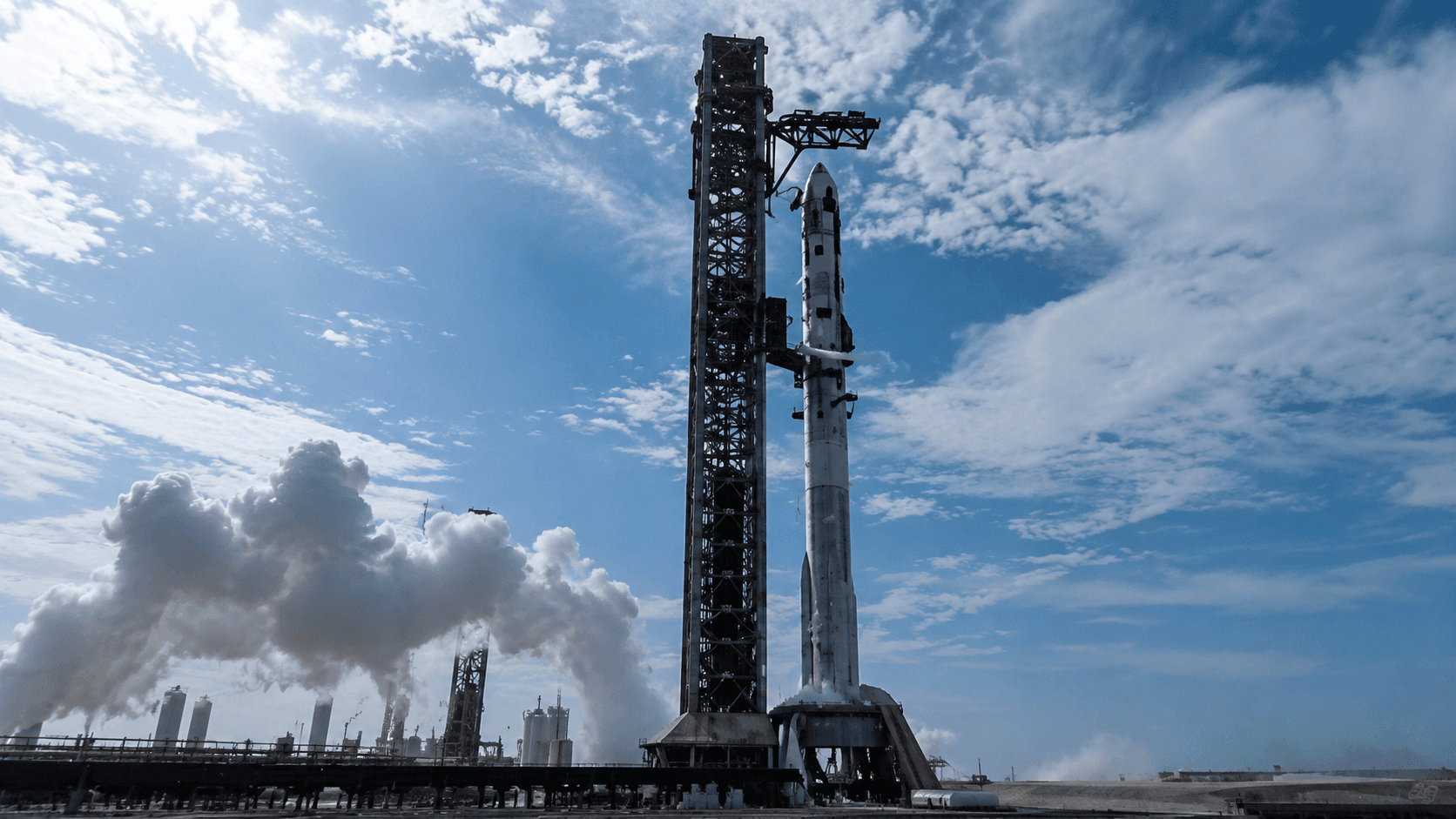
The cofounders — CEO Dan Summers, Brian Mongilio, and Michael Grant — previously ran Raptor engine integration and fabrication at SpaceX, the engine powering the Super Heavy booster on Starship. Summers said the Raptor team took its engine from full-scale concept to production in three years, against a typical jet-engine development cycle of more than two decades. The stated goal at 1872 is to automate most of the steel fabrication process by 2027.
The premise is a labor shortage that is not going away. The American Welding Society estimates the US will need 320,500 new welding professionals by 2029 as an aging workforce retires and demand from data centers, semiconductor fabs, and shipyards climbs. The Trump administration's tightening of legal immigration and enforcement against undocumented workers narrows the labor pool further for welding-intensive industries.
“The problem that we are trying to solve is how do we build more things with a decreasing pool of skilled labor to do it with, and this is a good place to start in terms of implementing automation.”— Dan Summers, CEO of 1872
Key facts
- 011872 launched Factory One in Cincinnati on July 22, 2026, backed by $15M in seed funding from The O.H.I.O. Fund.
- 02The American Welding Society projects the US will need 320,500 new welders by 2029 as the current workforce retires.
- 03Path Robotics welding arms hit 95–100% first-pass yields with 70% arc-on time, versus 10–12% for human welders.
- 04Robotic welding runs about $0.12 per weld inch against $0.78 for manual work — an 85% cost reduction.
- 05Assembling components for a single skid takes 4–5 days, while the actual weld runs only 2–4 hours.
1872 has partnered with Columbus-based Path Robotics for the robotic arc-welding cells on its floor. Path Robotics reports its systems hit 95 to 100 percent first-pass yields — the share of parts clearing inspection without rework or scrap — and run at 70 percent arc-on time. Human welders, by comparison, spend only 10 to 12 percent of their shift with the arc actually on, with the rest going to alignment, repositioning, and tool adjustment.
The unit economics follow from the utilization gap. A Path Robotics workstation welds at roughly $0.12 per weld inch, against roughly $0.78 per weld inch for a manual welder — an 85 percent cost reduction on the weld itself. Welding a skid takes two to four hours; assembling the cut components that feed the weld takes four to five days. That upstream assembly is where 1872 sees the biggest automation prize.
Summers said the company started with skids on purpose. They are lower-precision than a rocket-grade part, which leaves room for automation errors while still producing a useful piece of critical infrastructure. The plan is to eventually extend the process to structural frames and enclosures, both of which face the same skilled-labor bottleneck.
The software stack is where the SpaceX playbook shows up. 1872's website describes an AI-driven "Architect" system that ingests customer CAD files and produces a full manufacturing plan — pricing, sourcing, scheduling — before handing execution to a "Conductor" that orchestrates robotic arms, autonomous material-handling vehicles, and rails on the floor. The company is using customized off-the-shelf models, including large language models, and plans to fold in physics-based models trained on production data as it runs more jobs.
“Our differentiator is our ability to take robotic systems that are either built by us or built by partners like Path Robotics, pull them into a single system and orchestrate them together in a way in which you can really achieve a seamless operation.”— Dan Summers, CEO of 1872
Summers is explicit that full autonomy is not the target. "We may achieve 80 percent autonomous operations, and we may decide that it makes sense to stop there because there's just diminishing returns to go to full 100 percent," he said. The next twelve months, he added, will focus on peeling back manual processes both on the physical floor and in the digital scheduling layer.
The risks are the usual ones for robotic manufacturing startups. First-pass yield claims from a robotics vendor do not automatically transfer to a new factory with a different mix of parts and tolerances, and the assembly step 1872 wants to automate — the four-to-five-day component prep — is exactly the fiddly, variable work that has resisted robotic solutions elsewhere. $15 million is enough to stand up one factory and prove the software, but not to scale nationally without a follow-on round or a large anchor customer.
The bet worth watching is whether the AI data center buildout pulls its own supply chain into automation the way SpaceX pulled aerospace manufacturing. Nvidia-financed sites like the 4.25 GW Ohio facility being built for OpenAI need enormous volumes of the exact steel infrastructure 1872 is targeting, and the welder shortage means those customers cannot simply hire their way out. If the Architect-Conductor stack works at even 80 percent autonomy, 1872 becomes an infrastructure supplier to the AI infrastructure boom — a smaller but more defensible position than trying to build the next rocket engine.

Working on something we should cover, or seeing a story we missed? Send leads, documents, or feedback to hello@aichatdaily.com. For sensitive tips, see our secure tips page for Signal and PGP options.
Spotted an error? Email hello@aichatdaily.com with the URL and the issue, or read our full corrections policy.