The five hyperscalers building the AI economy — Alphabet, Microsoft, Amazon, Meta, and Oracle — will spend roughly $750 billion on data centers this year and are on track to hit nearly $1.1 trillion in cumulative AI expenditures by 2027. Total AI revenues this year will land between $150 billion and $200 billion. That gap is the single most important number in the industry, and it is not closing on its own.
Jessica Wachter, a finance professor at the University of Pennsylvania's Wharton School and a former SEC chief economist, ran the accounting. To break even by 2030 — after paying the cost of capital, delivering a 15% return, and absorbing depreciation on rapidly aging GPU fleets — the hyperscalers need to increase their own productivity by a factor of 2.7. She and her coauthor benchmark that against the US IT boom that started in the mid-1990s, which delivered comparable growth over roughly a decade.
Compressing that decade of growth into four years is the ask. Wachter is blunt about the downside: if the hyperscalers miss those profit targets, they fall behind on interest payments, and bankruptcy moves onto the table. Her paper, coauthored with a Wharton colleague, concludes that a failed productivity boom would make the current buildout the largest misallocation of capital in history.
“that's a lot of growth compressed into a few years.”— Jessica Wachter, Wharton finance professor and former SEC chief economist
Key facts
- 01Hyperscalers will spend roughly $750 billion this year and nearly $1.1 trillion by 2027 on AI data centers.
- 02Wharton's Jessica Wachter calculates hyperscalers need a 2.7x productivity increase to break even by 2030, assuming a 15% return.
- 03Total AI revenues this year are estimated at $150–200 billion, per former SEC chair Gary Gensler.
- 04Columbia's Stijn Van Nieuwerburgh pegs required annual AI revenues at $3.7 trillion by 2032 for a 10% return on 183 gigawatts of planned capacity.
- 05Alphabet posted a $5.9 billion free cash deficit last quarter — its first shortfall since going public in 2004 — on nearly $120 billion in revenue.
The spending is accelerating, not slowing. Some projections put total capital investment across the five hyperscalers at more than $5 trillion over the next four years, which would push AI infrastructure spending toward 3% of US GDP. That is one of the largest sustained capital investments by any industry in modern economic history, and it is happening while free cash flow across the group is turning negative.
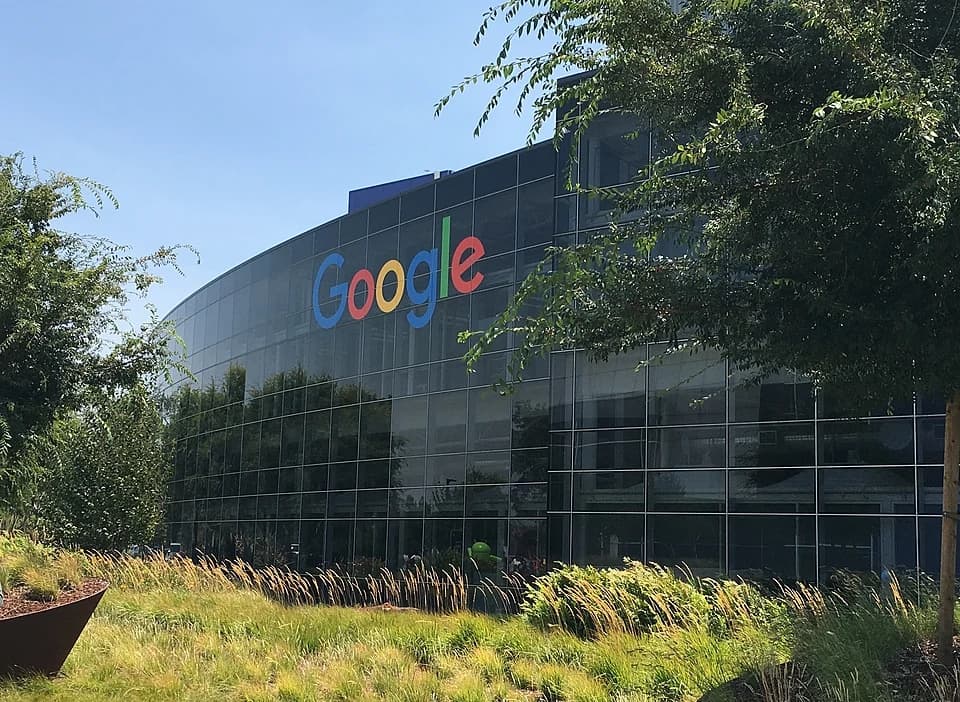
Alphabet is the sharpest illustration. Last quarter it booked nearly $120 billion in revenue and still posted a $5.9 billion free cash deficit — its first shortfall since Google went public in 2004. The cash was consumed by AI infrastructure spending. Alphabet is the company in the group with the deepest reserves and the strongest core business; the others have less room.
“The challenge is that the spending does not have commensurate revenues yet . That's a fact”— Gary Gensler, MIT Sloan professor and former SEC chair
Gary Gensler, who ran the SEC during the Biden administration and now teaches at MIT's Sloan School, frames the buildout as "a parlay bet by the capital markets and the economy." Three wagers have to hit at once: hyperscalers must generate enormous revenues, AI must lift broad economic productivity, and expensive frontier models must hold off cheaper alternatives that many businesses may find good enough. Each depends on the other two.
The revenue bar rises the further out you look. Stijn Van Nieuwerburgh, a finance professor at Columbia Business School, models 183 gigawatts of planned AI compute capacity built between 2025 and 2032 at roughly $41 billion per gigawatt. To deliver a 10% return — the floor most investors will accept — the industry needs about $3.7 trillion in annual AI revenues by 2032. Other analysts arrive at similar figures using different assumptions.
The chips inside these facilities compound the pressure. GPU performance is roughly doubling every two years, which drives the model progress everyone sees but also means today's hardware ages fast. Compute electronics account for about 60% of data center costs. Owners of facilities coming online this year will need to spend billions more on next-generation chips before the end of the decade or watch their capacity fall behind. Mihir Kshirsagar of Princeton's Center for Information Technology Policy warns that data centers that miss the reinvestment cycle risk becoming "hulks," stranded assets scattered across the country.
Selling subscriptions and API tokens to businesses eager to experiment with AI has carried revenue growth so far. That runway is finite. Customers will eventually need bottom-line evidence — measurable productivity gains, higher margins, faster shipping — to justify renewals at scale. Daron Acemoglu, the MIT economist and 2024 Nobel laureate, argues that without productivity gains showing up in the economic data, both investment and revenue growth will stall.
“If you don't get the productivity gains, at some point people are going to sour on AI, and that will bring down investments and it would also limit revenue growth”— Daron Acemoglu, MIT economist and 2024 Nobel laureate
The productivity signal is mixed. A survey of 6,000 senior business executives across the US, UK, Germany, and Australia found that roughly 90% report no productivity increase from AI over the last three years. Respondents expect a 1.45% boost over the next three years globally, with US executives forecasting 2.25%. A follow-up survey pointed to $280 billion in private-sector AI spending by the end of 2026. The executives also expect to hit those productivity numbers partly by cutting headcount while increasing sales — a pattern that will sharpen the public backlash already visible around data center siting.
The counterweight to the bull case is not that AI does not work. It is that the financing structure now requires a specific pace of monetization the technology may not deliver on schedule. Debt is expensive, GPU depreciation is relentless, and the free cash flow cushion is thinning across the group. If demand for frontier compute plateaus — because smaller open models close enough of the gap, or because customers churn from paid tiers, or because a recession compresses IT budgets — the numbers do not work at any assumption of eventual utility.
The trillion-dollar wager is really a bet on timing. AI's long-run productivity impact is not the question the capital markets are asking; the question is whether that impact shows up on hyperscaler income statements before the debt service does. Every incremental data center announcement raises the required revenue for the industry, and none of the five buyers can unilaterally slow down without ceding position to the other four. That dynamic is how bubbles inflate, and it is also how genuinely large infrastructure booms get financed. Which one this turns out to be will be decided by 2030, and the margin for error at current spending levels is narrowing.

Working on something we should cover, or seeing a story we missed? Send leads, documents, or feedback to hello@aichatdaily.com. For sensitive tips, see our secure tips page for Signal and PGP options.
Spotted an error? Email hello@aichatdaily.com with the URL and the issue, or read our full corrections policy.