Indian data center operator Yotta is preparing a public listing between January and March 2027, aiming to raise up to $1.5 billion as AI workloads reshape the country's compute market. The Hiranandani Group-backed company would be one of the largest infrastructure debuts on Indian exchanges in years, and the first hyperscale operator to tap public markets specifically on an AI-demand thesis.
The $1.5 billion target places Yotta's raise well above the typical Indian tech IPO band and puts it in the same conversation as global data center listings that have priced in the last 18 months. The timing — Q1 of 2027 — gives the company roughly a year to lock in tenant commitments and firm up its capacity expansion pipeline before facing public-market scrutiny.
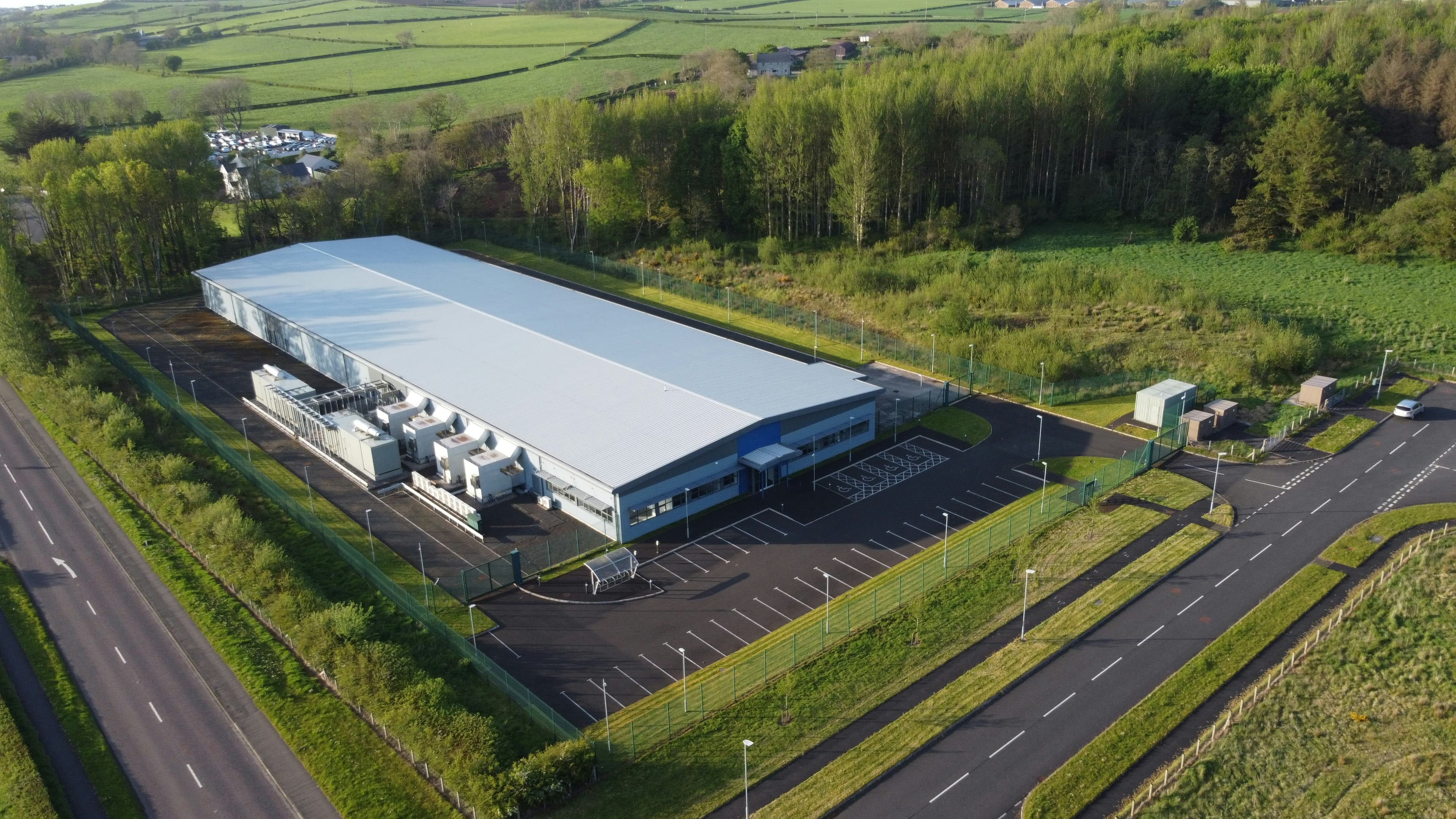
Yotta operates hyperscale campuses in India, with its flagship NM1 facility in Navi Mumbai anchoring a national footprint that has expanded steadily since 2020. The company has positioned itself as the domestic answer to hyperscaler infrastructure, offering colocation and, more recently, GPU-as-a-service capacity aimed at Indian enterprises and government AI programs.
Key facts
- 01Yotta is targeting a Jan–March 2027 IPO in India.
- 02The listing aims to raise up to $1.5 billion.
- 03The proceeds are pegged to AI-driven data center demand.
- 04Yotta operates hyperscale facilities across India and is backed by the Hiranandani Group.
The IPO thesis rests almost entirely on AI. Training and inference workloads have pushed data center power demand into a different regime than the last decade of cloud growth, and India — with a large developer base, aggressive sovereign AI ambitions, and comparatively cheaper land and labor — has become one of the more contested markets for new capacity. Yotta is betting public investors will pay for exposure to that curve.
The company has already made GPU procurement a public part of its story, disclosing prior deals for Nvidia H100 inventory to serve Indian customers who cannot easily access US hyperscaler capacity. Sovereign compute — the idea that governments and regulated industries want AI infrastructure inside their own jurisdiction — is one of the clearer tailwinds behind the raise.
India's regulatory posture has helped. The government has pushed data-localization rules across financial services, telecom, and health, forcing workloads that might otherwise sit in Singapore or the US onto domestic soil. Yotta is one of a small number of operators with the scale to absorb that redirected demand, alongside CtrlS, NTT-Netmagic, and the hyperscalers' own India regions.
The competitive picture is not free of pressure. AWS, Microsoft Azure, and Google Cloud have each expanded their India regions in the last two years, and Reliance Jio has telegraphed its own AI infrastructure ambitions. A domestic operator raising $1.5 billion to build capacity into that field is credible, but it is also making a bet that Indian AI demand grows faster than hyperscaler supply can meet it.
There are also the standard data center caveats: power availability, land approvals, and grid interconnect timelines are the binding constraints, not capital. Raising $1.5 billion helps only insofar as Yotta can convert that into commissioned megawatts on a predictable schedule. The AI infrastructure market is littered with announced capacity that slipped by 18 to 24 months against original commitments.
A Q1 2027 listing also assumes the AI-infrastructure trade still commands a premium multiple by then. If GPU supply loosens materially, if inference efficiency gains reduce total compute demand, or if a broader correction hits AI-adjacent equities, the pricing window Yotta is aiming for could compress. The company will need to show contracted revenue, not just narrative, by the time bankers open the book.
For the Indian AI market, a Yotta IPO at this scale would be a structural moment. It would give public investors a pure-play way to bet on domestic AI infrastructure, pressure competitors to disclose their own economics, and set a valuation benchmark for the next wave of Indian data center capital raises. Whether $1.5 billion is enough depends less on the number and more on how much of India's AI buildout actually stays onshore — and Yotta has spent the last three years betting that most of it will.

Working on something we should cover, or seeing a story we missed? Send leads, documents, or feedback to hello@aichatdaily.com. For sensitive tips, see our secure tips page for Signal and PGP options.
Spotted an error? Email hello@aichatdaily.com with the URL and the issue, or read our full corrections policy.