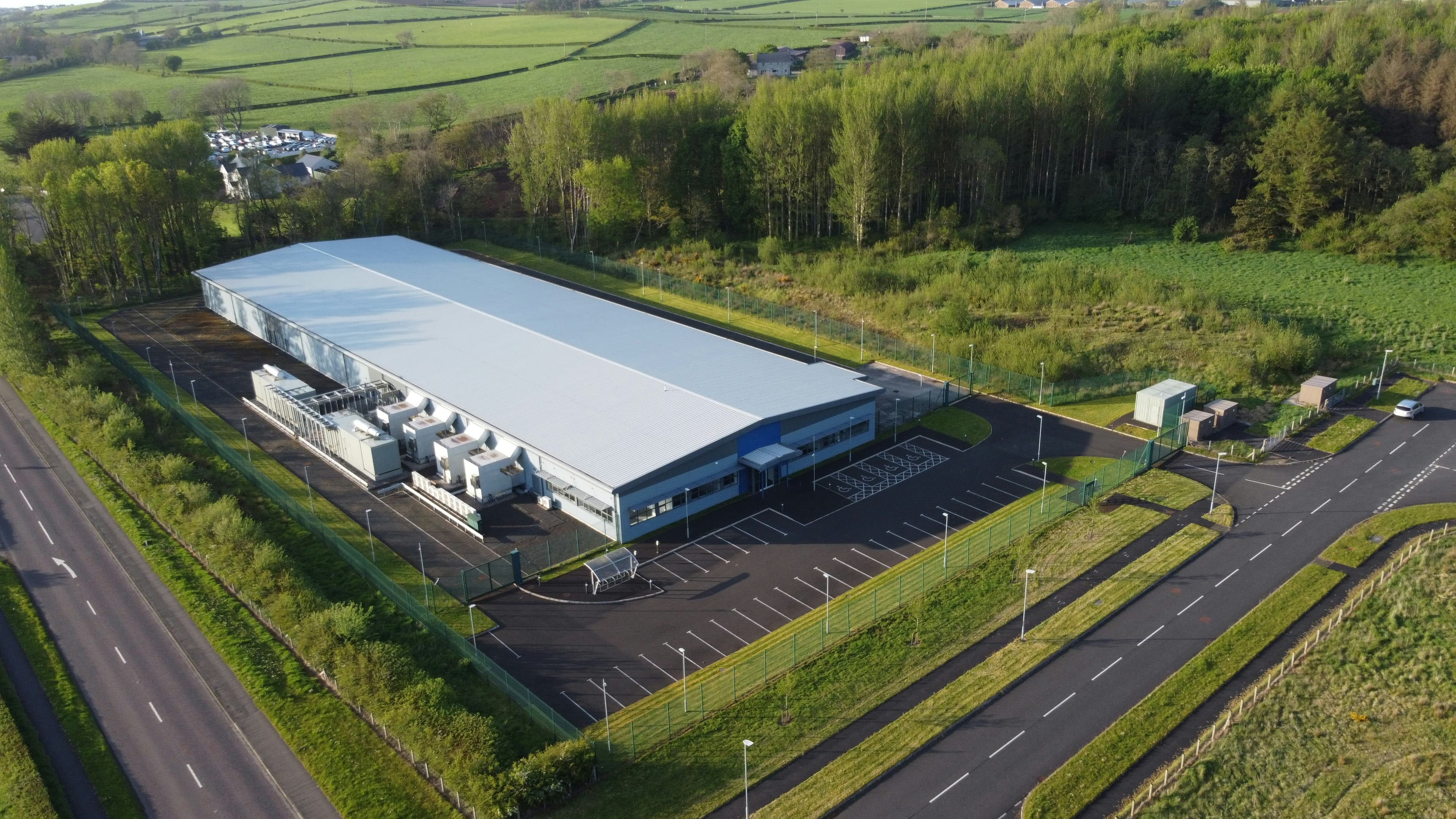
Meta is making its first AI infrastructure bet in India, partnering with Reliance Industries to build a 168-megawatt AI data center in Jamnagar, Gujarat. The facility will be ready within two years, powered by renewable energy, and cooled using desalinated seawater. Meta has committed to covering the full cost of the energy and water its operations consume.
The deal extends a relationship that started with Meta's $5.7 billion investment in Reliance's Jio Platforms in 2020 and deepened last year through a $100 million joint venture targeting enterprise AI customers in India and overseas. Reliance will handle end-to-end services on the new site — design, construction, renewable power, connectivity, and ongoing operations — positioning the conglomerate as a one-stop AI infrastructure vendor for global tech firms.
Capacity at Jamnagar will feed directly into Meta's worldwide network of AI facilities, not just serve Indian workloads. Separately, Meta said it has contracted nearly 1 gigawatt of new renewable energy capacity in India through agreements with CleanMax and Fourth Partner Energy. That supply will supplement the renewables powering the Jamnagar site.
Key facts
- 01Meta and Reliance will build a 168-megawatt AI data center in Jamnagar, Gujarat, ready within two years.
- 02The deal extends a relationship that began with Meta's $5.7B investment in Jio Platforms in 2020 and a $100M enterprise AI joint venture last year.
- 03Meta separately contracted nearly 1 gigawatt of new renewable energy capacity in India via CleanMax and Fourth Partner Energy.
- 04India's installed data center capacity rose from 375 MW in 2020 to 1.5 GW in 2025, with projections of more than 8 GW by 2030.
- 05Blackstone-backed AirTrunk announced a $30B plan this week to build 5 GW of Indian data center capacity by 2030.
India has become one of the most actively contested geographies for AI infrastructure. Installed data center capacity in the country has risen from roughly 375 megawatts in 2020 to about 1.5 gigawatts in 2025, according to government data, and industry projections put the figure above 8 gigawatts by the end of the decade. Cloud adoption, AI training and inference workloads, and growing demand for local data processing are the drivers.
Earlier this week, Blackstone-backed AirTrunk announced a $30 billion plan to build 5 gigawatts of Indian data center capacity by 2030. Indian conglomerates Adani and Tata Consultancy Services have also unveiled major data center expansions tied to AI workloads. Microsoft, Amazon, Google, OpenAI, and Uber have all announced India AI or cloud infrastructure commitments in recent months.
New Delhi has actively courted the spending. Foreign cloud providers receive tax exemptions through 2047 on services sold overseas, provided those workloads run from Indian data centers — a long-dated incentive designed to make the country a default location rather than a regional pick. The combination of cheap renewable power, available land near port infrastructure like Jamnagar, and a sizable engineering workforce has made the math work for hyperscalers.
For Reliance, the Meta agreement is a marquee anchor tenant. The company has been signaling for two years that it wants to move beyond telecom and retail into AI infrastructure, and securing a U.S. hyperscaler on a multi-year lease validates that pitch. Reliance said the 168-megawatt facility can be expanded over time, leaving room for follow-on commitments from Meta or additional tenants.
Neither company disclosed the value of the agreement, the specific AI workloads the facility will support, or whether Meta plans further India infrastructure investments. The renewable-energy and desalination-cooling commitments answer two of the most common objections to large AI data centers — grid carbon intensity and freshwater draw — though neither company shared a closed-loop versus open-loop cooling design or a projected water-reuse rate.
The Meta-Reliance announcement reshapes the India AI buildout in two ways. It establishes Reliance as a credible counterparty for hyperscaler-scale leases, which had previously gone to specialist operators like AirTrunk or domestic players like Adani. And it confirms Meta is willing to anchor capacity outside the U.S. and Europe for workloads that serve its global network — a meaningful signal as power constraints in Virginia, Ireland, and the U.S. Midwest tighten. Expect more frontier AI capacity to land in Gujarat, Hyderabad, and Maharashtra over the next 24 months as the 2047 tax window and renewable-power economics do their work.

Working on something we should cover, or seeing a story we missed? Send leads, documents, or feedback to hello@aichatdaily.com. For sensitive tips, see our secure tips page for Signal and PGP options.
Spotted an error? Email hello@aichatdaily.com with the URL and the issue, or read our full corrections policy.