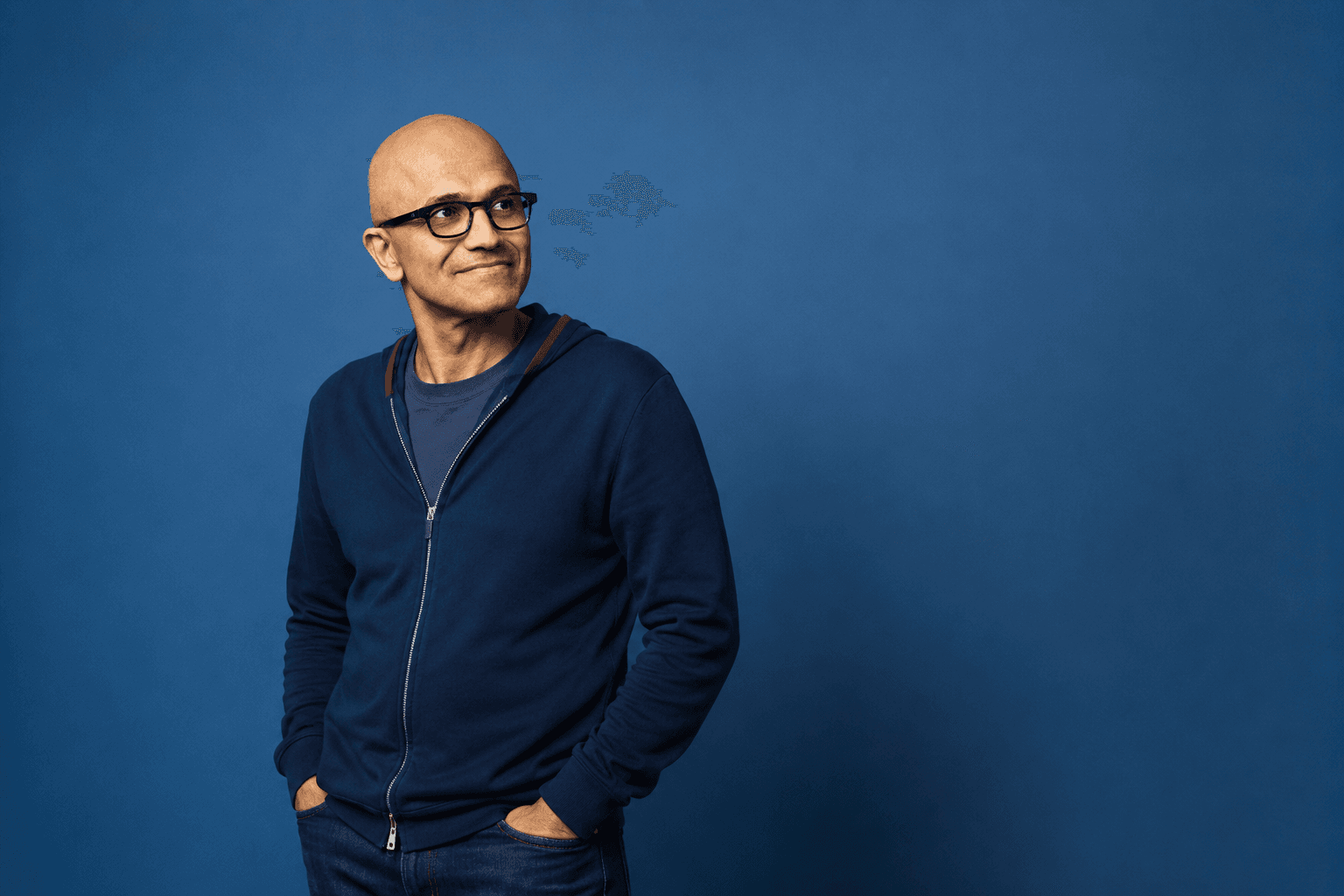
OpenAI Chief Financial Officer Sarah Friar published a set of five lessons this week on building an AI-native finance function, drawn from her work rewiring the finance organization at the company shipping ChatGPT and GPT-5. The post, on OpenAI's blog, spans automated forecasting, tighter internal controls, and how finance leaders should actually measure the return on money spent on AI. It is one of the first detailed public accounts of how a frontier lab runs its own books.
The framing is deliberate. Friar treats finance not as a downstream consumer of AI tools but as an early proving ground for the same models the company sells to enterprise customers. That inverts the usual corporate order, in which finance is the last department to touch new software because of audit risk and control requirements. At OpenAI, the argument goes, finance should be first because the models are already in the building.
Forecasting is the flagship example. Friar describes moving away from spreadsheet-driven monthly cycles toward continuously updated projections that pull from operating data automatically. For a company whose revenue, compute costs, and headcount are all moving on steep curves, the old quarterly rhythm breaks down. Automated forecasting is less about accuracy on a single number and more about the finance team catching inflection points before the board meeting, not after.
Key facts
- 01OpenAI CFO Sarah Friar published five lessons on running an AI-native finance function on the OpenAI blog.
- 02The playbook covers automated forecasting, stronger internal controls, and frameworks for measuring AI return on investment.
- 03Friar is writing from inside the fastest-scaling revenue story in AI, giving the guidance unusual weight with peer CFOs.
- 04The post reframes finance from a back-office cost center to an early adopter of the company's own models.
Controls are the harder story. The instinct in most finance organizations is to slow AI adoption in the name of Sarbanes-Oxley compliance, segregation of duties, and audit trails. Friar's argument is the opposite: AI, applied to the control environment itself, can strengthen review coverage, flag anomalies earlier, and reduce the manual reconciliation load that consumes senior accountant time. The subtext is that CFOs who wait for a mature control playbook will be reading it from behind.
The ROI section is the one peer CFOs will pull first. Friar frames AI spend the way a growth-stage operator frames sales and marketing: cohorts, payback windows, and a clear separation between experiment budget and production budget. That is a departure from the loose "AI transformation" line items that have crept into public company disclosures over the past two years, where hundreds of millions of dollars in spend get justified with vague productivity claims.
Talent is threaded through the post. Friar argues that the finance analyst of 2026 needs enough fluency with model behavior to design prompts, evaluate outputs, and recognize when a model is confidently wrong. That is a real hiring signal. The traditional pipeline from investment banking analyst programs and Big Four audit does not train for this, and the FP&A job description at an AI-native company is drifting toward something that looks more like a data analyst who happens to own the P&L.
The post sits inside a broader push by OpenAI to publish operating playbooks that double as marketing for its enterprise business. Model ML wiring GPT-5.6 Sol into finance workflows, which we covered recently, points in the same direction: finance is emerging as one of the highest-value verticals for AI deployment, and the vendors know it. Friar's post gives buyers a reference architecture written by someone who is running it internally.
The counterweight is that OpenAI is not a normal company, and its finance function is not a normal finance function. Friar has effectively unlimited access to the company's own models, engineers, and infrastructure, and her team is operating on a revenue base that grows fast enough to absorb aggressive experimentation. A public-company CFO with a mature ERP stack, an activist investor, and a skeptical audit committee will find the playbook harder to run in practice than in theory. The post does not spend much time on that gap.
For the AI market, the significance is less about the individual lessons and more about the signal. OpenAI's own CFO is now publishing under her own name on how to buy and deploy AI inside finance, and that legitimizes finance as a first-tier target for enterprise sales teams at OpenAI, Anthropic, Microsoft, and every vertical player chasing the same buyer. The next twelve months of enterprise AI revenue will be won or lost inside the CFO's office, and Friar has just handed her competitors a map to the room.

Working on something we should cover, or seeing a story we missed? Send leads, documents, or feedback to hello@aichatdaily.com. For sensitive tips, see our secure tips page for Signal and PGP options.
Spotted an error? Email hello@aichatdaily.com with the URL and the issue, or read our full corrections policy.