OpenAI is selling a $70 ChatGPT-branded basketball. The 100% rubber ball landed on OpenAI's merchandise store this week alongside the company's first piece of hardware, a $230 mini keyboard billed as a 'command center for agentic work,' and a $175 quarter-zip with 'research' stitched in cursive across the chest. At $70, the basketball costs roughly the equivalent of 56 million input tokens on GPT-5.
The ball is tied to what OpenAI calls the 'Pause. Play. Prompt.' campaign. The product listing describes it as 'a physical reminder that creativity doesn't just live on our screens.' There is no other reference to the campaign anywhere else on OpenAI's site, which reads less like a coordinated brand initiative and more like a soft nudge for Codex users to occasionally close the laptop.
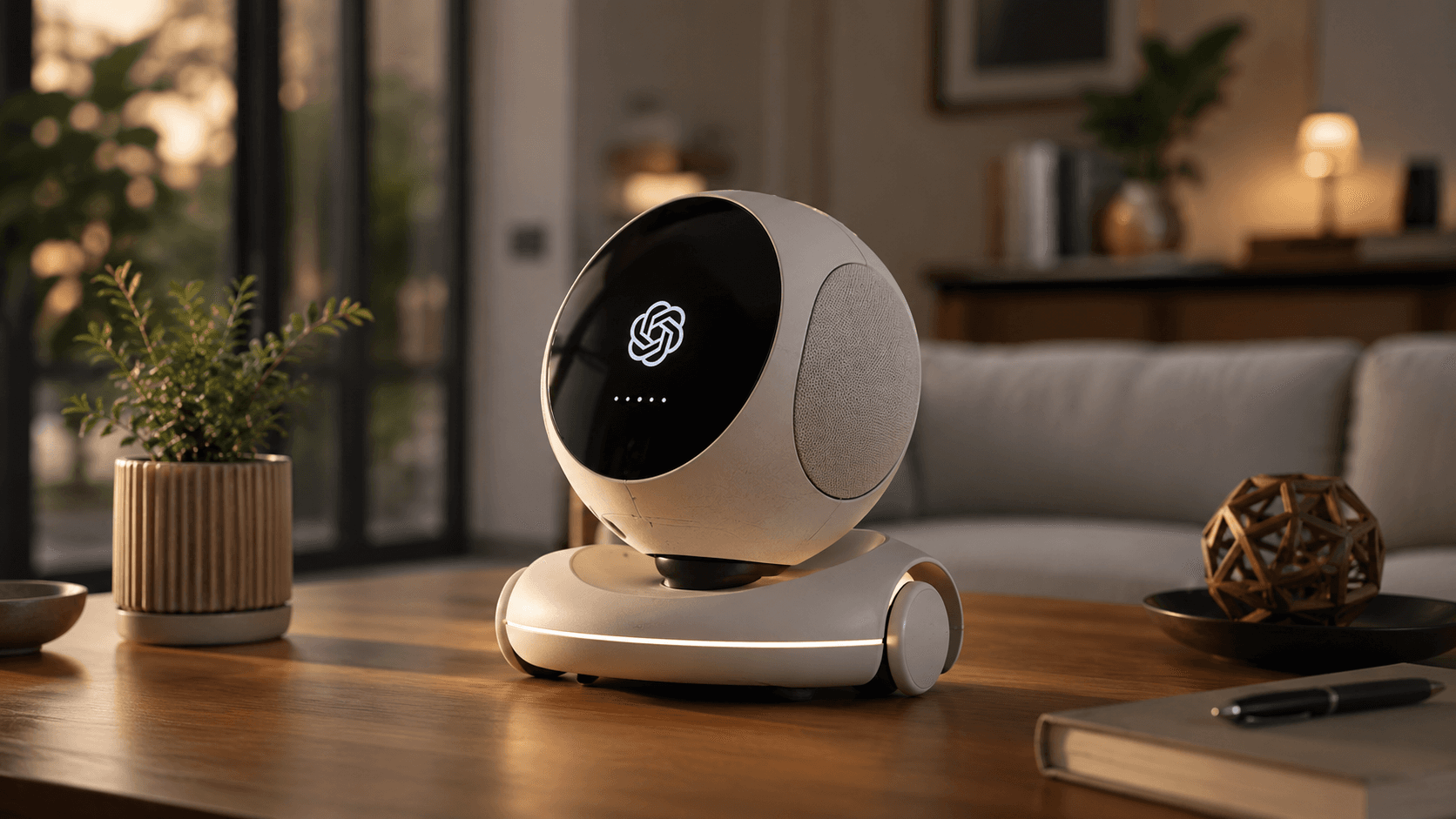
The merch drop arrives as OpenAI pushes further into consumer hardware. Reporting last week described the company's first standalone device as a screenless smart speaker capable of movement, developed with former Apple designer Jony Ive's team. The $230 mini keyboard is the first physical product OpenAI has actually put on sale, and the basketball is the first piece of unambiguous lifestyle swag from a company that has spent most of its history selling API credits and enterprise seats.
Key facts
- 01OpenAI is selling a 100% rubber ChatGPT basketball for $70, roughly the price of 56 million GPT-5 input tokens.
- 02The ball ships alongside OpenAI's first hardware product, a $230 mini keyboard the company calls a 'command center for agentic work.'
- 03A $175 quarter-zip with 'research' stitched in cursive rounds out the drop, which OpenAI ties to a 'Pause. Play. Prompt.' campaign.
- 04OpenAI made no other mention of the Pause. Play. Prompt. campaign on its website beyond the basketball listing.
The rest of the collection leans into the aesthetic of a research lab that has learned to market itself. One item carries the slogan 'Good research takes time' — useful attire, in theory, for a founder facing investors demanding faster growth. The $175 quarter-zip's product copy says the garment 'features a crisp collar that reminisces on our days in academia,' pitched at customers who apparently want their outerwear to signal a graduate seminar.
The pricing sits well above generic branded merchandise. A comparable rubber outdoor basketball from a sporting-goods brand typically retails between $15 and $25; OpenAI's markup is roughly three-to-fourfold. The quarter-zip, at $175, is priced in line with mid-tier fashion labels rather than typical corporate swag. The mini keyboard at $230 slots into the crowded premium-peripheral market, competing with mechanical keyboards from established hardware makers.
The commercial logic is thinner than the pricing suggests. Company merchandise usually serves one of two purposes: giveaway swag to build affinity, or high-margin merchandise sold to an existing fan base. OpenAI is attempting the second without a clear precedent for how large its consumer-fandom cohort actually is. ChatGPT has hundreds of millions of weekly users, but the overlap between people who use the product daily and people who want to walk into a park carrying a ChatGPT-branded ball is unclear.
The Humane Ai Pin remains the cautionary comparison for consumer AI hardware. That product launched with heavy press attention and shut down after failing to find a customer base beyond early adopters. OpenAI's merchandise is a lower-stakes experiment — a rubber ball and a fleece do not carry the same technical or financial risk as a wearable computer — but the same question applies: who is the target buyer, and how many of them exist.
There is a defensible read on the drop. Merchandise builds brand identity, and OpenAI is in the middle of transitioning from a research lab that ships APIs into a consumer company that ships devices, agents, and eventually a screenless speaker. Physical goods extend the brand into places software cannot go, and $70 basketballs and $175 quarter-zips generate margin per unit that outperforms most SaaS metrics. If even a small fraction of ChatGPT's user base buys, the storefront is profitable.
The counterweight is that consumer AI branding is not yet a mainstream signal. A Meta or Apple logo on a piece of apparel reads as neutral corporate branding. A ChatGPT basketball, in most contexts outside Silicon Valley, reads as a specific and slightly niche declaration. The category may need to mature before AI-lab merchandise crosses over the way sports and tech logos have.
For OpenAI, the merchandise storefront is a low-cost test of how far the ChatGPT brand can stretch beyond the chat window. The mini keyboard is the actual hardware play — a paid product with clear utility for the Codex and agentic-workflow user base the company is courting. The basketball is closer to a marketing experiment priced to see who bites. If the drop sells through, expect more. If it doesn't, expect the next OpenAI store refresh to look a lot more like the mini keyboard and a lot less like a rubber ball with a wordmark on it.

Working on something we should cover, or seeing a story we missed? Send leads, documents, or feedback to hello@aichatdaily.com. For sensitive tips, see our secure tips page for Signal and PGP options.
Spotted an error? Email hello@aichatdaily.com with the URL and the issue, or read our full corrections policy.