OpenAI launched its first piece of consumer hardware on July 15, a $230 light-up keyboard called the Codex Micro built in collaboration with specialty designer Work Louder. The device is pitched as a physical control surface for Codex, OpenAI's AI coding assistant, letting developers manage fleets of semi-autonomous coding agents from a dedicated peripheral instead of a phone or desktop window. OpenAI called it a "command center for agentic work." It arrives the same week Apple sued the company over alleged trade-secret theft tied to a separate, unreleased hardware project.
The Codex Micro's hardware is purpose-built for agent workflows. Light-up Agent Keys display the live status of running agents, customizable Command Keys act as shortcuts for frequent Codex actions, and a joystick launches common workflows. A physical dial adjusts the agent reasoning level — how much time and compute an agent spends on a given task — turning a setting that normally lives buried in a config into a tactile control.
The device is controllable and customizable through the ChatGPT desktop app, which handles pairing, key remapping, and workflow assignment. OpenAI told TechCrunch the Micro is a limited-run collaboration, framing it more as a novelty and brand signal than a mass-market product. At $230 for a specialty keyboard with no screen and no standalone compute, it is priced accordingly.
Key facts
- 01OpenAI's Codex Micro keyboard, co-designed with Work Louder, sells for $230 as a limited-run collaboration.
- 02The device features light-up Agent Keys, a joystick, and a dial that adjusts agent reasoning level, controlled via the ChatGPT desktop app.
- 03Apple sued OpenAI last week, alleging senior leadership pursued a 'deliberate strategy to extract its confidential information' for hardware development.
- 04A separate, unreleased OpenAI device — a portable, screenless smart speaker with self-moving mechanical elements — is being designed by former Apple engineers.
- 05OpenAI has denied wrongdoing in the Apple lawsuit.
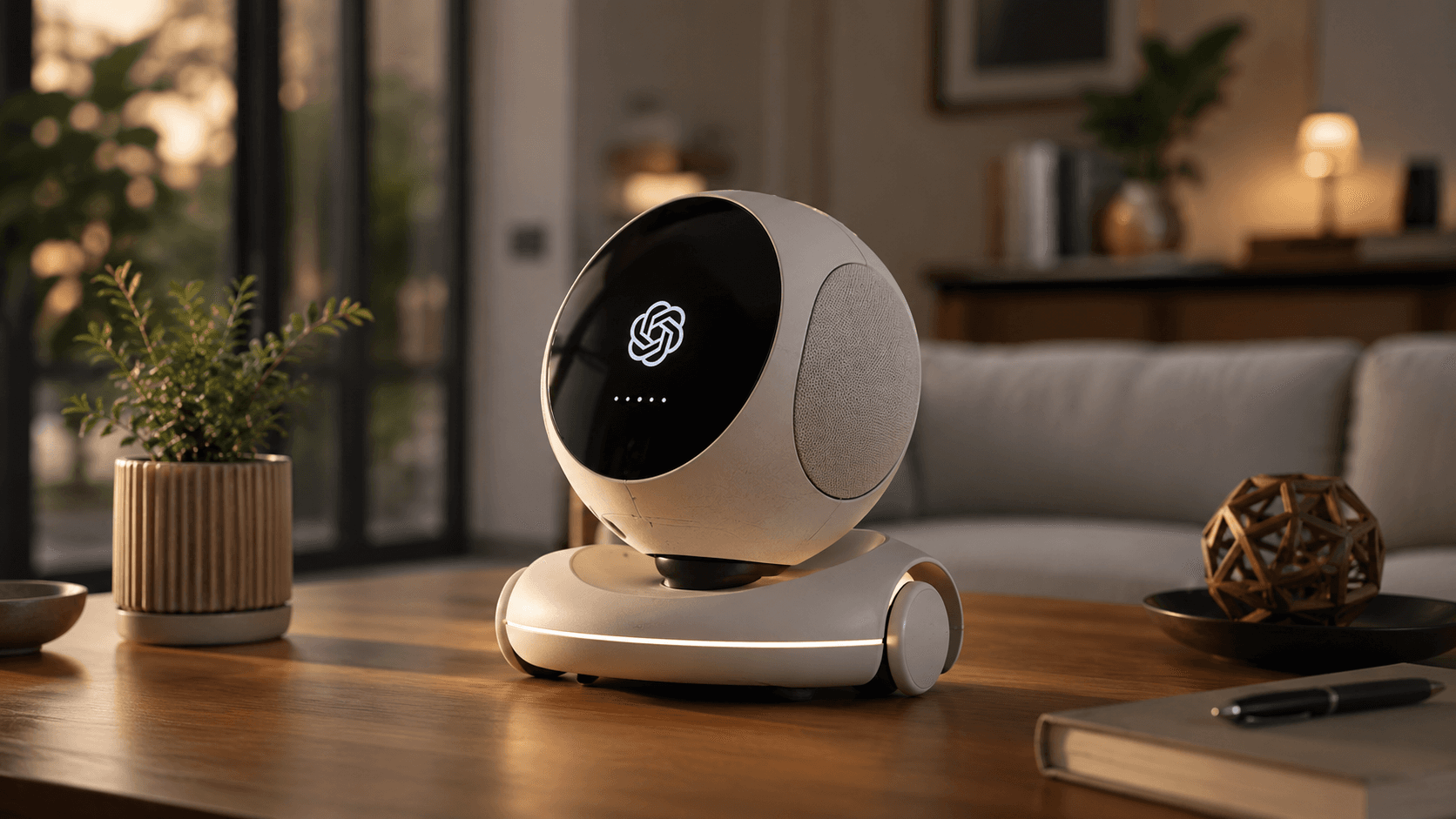
The more consequential hardware news arrived the same week. Bloomberg reported that OpenAI is developing a portable, screenless smart speaker that integrates with ChatGPT and includes "mechanical elements that can move on their own." The report describes a device still in active development and subject to change, with the specifics of how a screenless, portable, self-moving product coheres left unclear. AI Chat Daily covered the Bloomberg disclosure earlier this week, alongside the broader plan for a 2027 consumer device led by former Apple design chief Jony Ive.
The team building that speaker reportedly includes former Apple engineers, which is where the story gets legally complicated. Apple last week sued OpenAI, accusing the company's senior leadership of a "deliberate strategy to extract its confidential information" and alleging that OpenAI used that information in developing its own hardware. The suit specifically targets the recruitment of Apple hardware talent. OpenAI has denied wrongdoing.
The optics of shipping any OpenAI-branded hardware in the middle of that lawsuit are unavoidable, even if the Codex Micro itself is a keyboard co-designed with a third party and has no obvious tie to Apple's IP claims. Work Louder is the primary hardware designer on the Micro; Apple's complaint centers on the screenless smart speaker and the engineers building it, not on peripherals. Still, the Micro serves as the public debut of OpenAI-as-hardware-brand, and it lands with a legal cloud already forming.
For OpenAI, the Codex Micro is a low-stakes way to test whether developers will pay for physical accessories tied to agent workflows. Agent-driven coding tools — Codex, Cursor, Devin, Claude Code — are converging on a model where a human oversees several long-running agents at once, monitoring status and intervening on failures. A dedicated peripheral with status LEDs and shortcut keys is a reasonable answer to the problem of managing that fleet from a laptop screen full of terminal panes.
Whether developers actually want a $230 keyboard for that job is the real question. The Micro competes against free software solutions — status bars, notifications, dashboards — and against the broader specialty mechanical-keyboard market, where enthusiasts already spend similar sums on custom builds. Framing it as a limited-run collaboration lets OpenAI test the market without committing to inventory, support, or roadmap. If it sells out, it becomes a category. If it doesn't, it stays a novelty.
The Apple suit is the wildcard. If discovery surfaces evidence that OpenAI's smart-speaker team relied on Apple-confidential material, the company faces damages and potentially an injunction on shipping the 2027 device. If OpenAI's denial holds and the suit is dismissed or settled without admitted liability, the case becomes a footnote to a broader talent-poaching pattern that has defined AI hiring for three years. At this stage — one filing, one denial, no ruling — neither outcome is settled.
The Codex Micro is a marketing artifact more than a business line, but it marks a real inflection: OpenAI now sells physical products under its own brand. Combined with the smart-speaker development, the Ive-led 2027 device, and the ongoing Apple litigation, the company is committing publicly to a hardware future — one where the software company that started with a chatbot ends up competing with Apple, Google, and Amazon for space on the desk and in the living room. The keyboard is the opening move, and it's a cheap one to make.

Working on something we should cover, or seeing a story we missed? Send leads, documents, or feedback to hello@aichatdaily.com. For sensitive tips, see our secure tips page for Signal and PGP options.
Spotted an error? Email hello@aichatdaily.com with the URL and the issue, or read our full corrections policy.