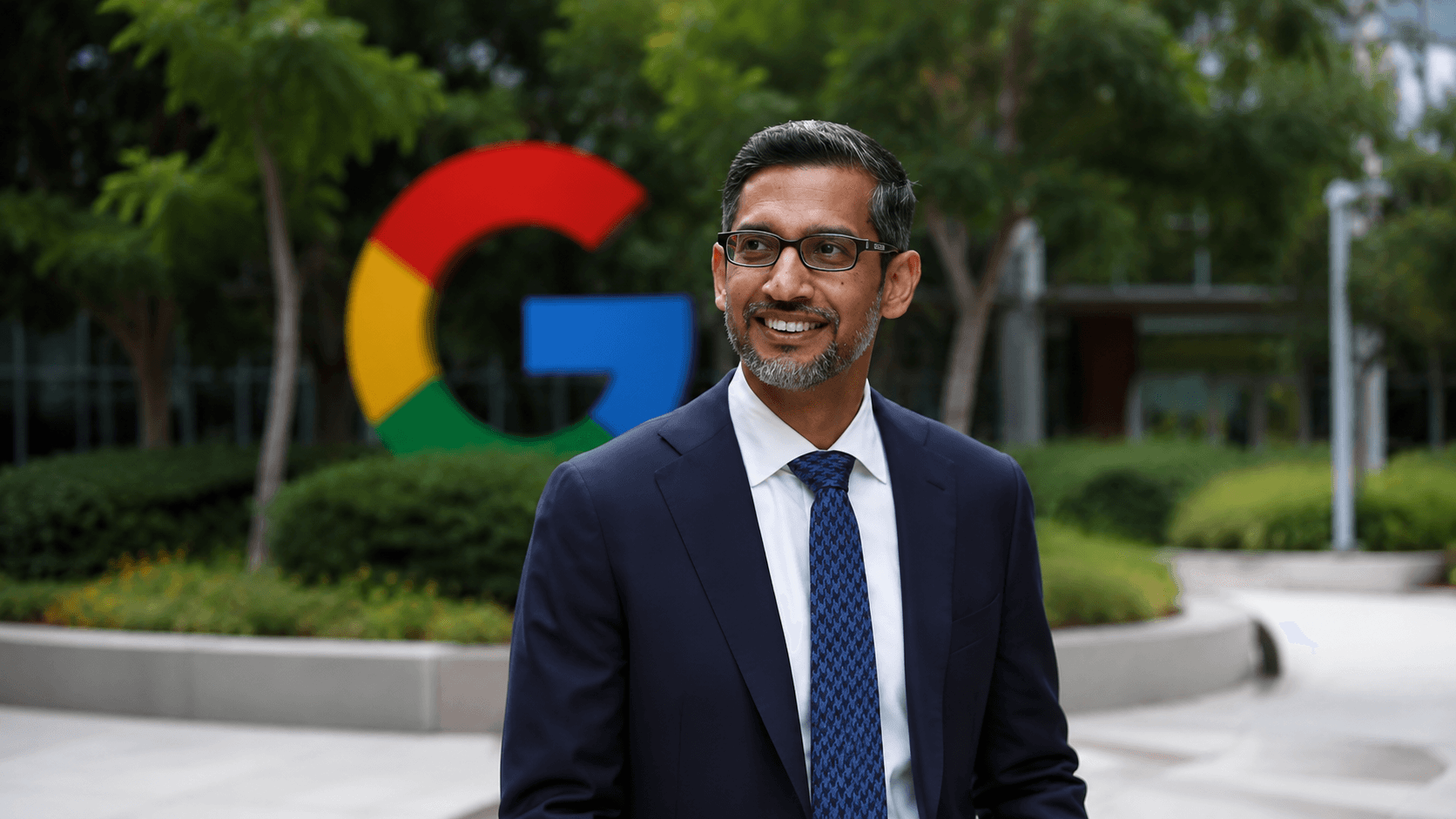
Google CEO Sundar Pichai says the compute Google has today is a function of decisions he made in 2024, and that the AI industry is still pretty far from the end state of recursive self-improvement. Pichai made the comments in an interview with Alex Kantrowitz on the Big Technology podcast, published October 23.
On recursive self-improvement, or RSI, Pichai described a middle stage rather than an endpoint. He said RSI loops already run alongside AI researchers in various parts of model development, with agents helping researchers in a partly automated way as they build the next models.
“You almost have agents helping AI researchers in some automated way work together to build these models.”— Sundar Pichai, CEO of Google
Pichai said compute is the binding constraint across the industry, not just at Google. Everyone is short, he said, and every company wishes it had two times what it had planned for. In practice, the compute Google runs today reflects planning from roughly two years ago.
“The compute we have today is a function of decisions I made in 2024”— Sundar Pichai, CEO of Google
Key facts
- 01Sundar Pichai told Big Technology that Google's current compute is a function of decisions he made in 2024.
- 02Pichai said everyone is short on compute and wishes they had two times what they planned for.
- 03Google Cloud grew 82% in the most recent quarter, and Pichai said it forgoes some short-term revenue to support frontier AI.
- 04Pichai said the industry is pretty far from the end state of recursive self-improvement (RSI).
- 05Google is sending TPUs to space under Project Suncatcher, which Pichai compared to Waymo as a long-horizon bet.
He did not frame the shortage purely as a problem. Pichai said Google's AI researchers work under some constraints, and that those constraints are also good for the research.
The shortage also shapes how Google splits compute between products and frontier research. Google Cloud grew 82% in the most recent quarter, and Pichai said the cloud business is at any given moment forgoing short-term revenues so that capacity can go to frontier AI work.
On product direction, Pichai said Google is working toward a single agent that users can address whether they are in Workspace, in Search or in Gemini. He also discussed Google's deal to license Gemini to help Apple improve Siri, saying Apple has done a phenomenal job customizing the models and building them into Siri, and that Google is committed to doing more.
Pichai also addressed Project Suncatcher, Google's effort to send TPUs into space for orbital compute. He compared it to Waymo as a long-horizon moonshot, saying it looks a bit like science fiction today but could be working in a meaningful way 10 to 20 years from now.
Pichai said he expects a Hello World moment from the TPUs Google is sending to space, a milestone he described as arriving as he spoke.

Working on something we should cover, or seeing a story we missed? Send leads, documents, or feedback to hello@aichatdaily.com. For sensitive tips, see our secure tips page for Signal and PGP options.
Spotted an error? Email hello@aichatdaily.com with the URL and the issue, or read our full corrections policy.