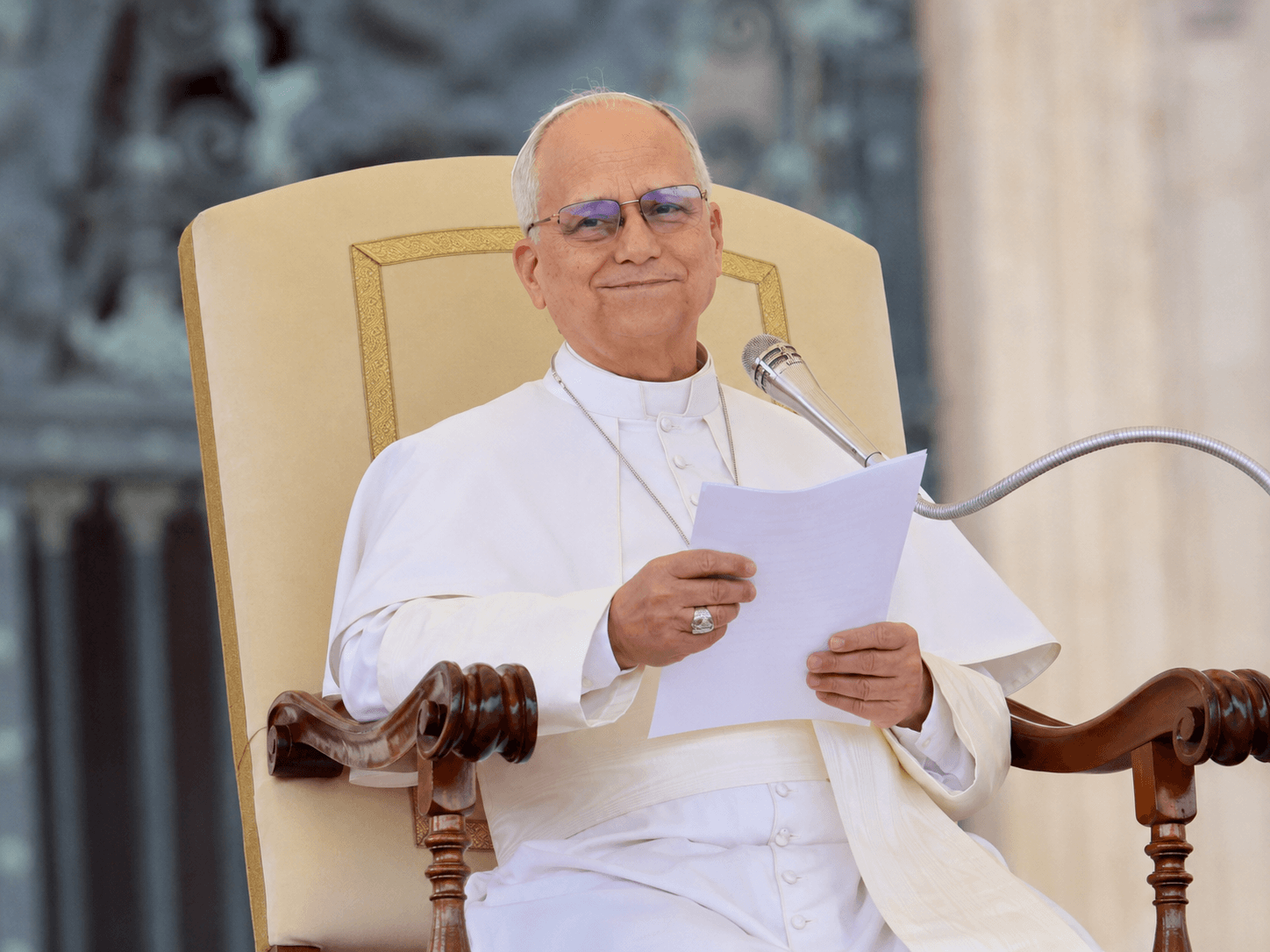
There is a Catholic priest on the payroll at Anthropic, the company building one of the most powerful AI systems in the world. His name is Father Brendan McGuire. He used to be a tech executive. Then he became a priest. Then, in a turn that should give all of us pause, he went back.
If you find this reassuring, you are probably a person of faith. If you find it alarming, you are probably a secular technologist. Both reactions are reasonable. Both are incomplete.
What Father McGuire's presence at Anthropic actually tells us is something neither camp wants to hear: that the companies building AI have already made themselves into moral institutions, whether they intended to or not. They are deciding, billions of training examples at a time, what counts as true, what counts as reasonable, what counts as the kind of answer a human being deserves. That is not engineering. That is theology with better compute.
Key facts
- 01Father Brendan McGuire spent years as a technology executive before leaving to become a Catholic priest, then returned to Silicon Valley to help shape AI ethics at Anthropic.
- 02McGuire argues that diverse moral perspectives — including religious ones — are essential to preventing AI systems from encoding the biases of any single worldview.
- 03Anthropic's willingness to bring a priest into its ethical work signals a growing recognition that purely technical safety frameworks are insufficient for the cultural questions AI raises.
- 04The episode explores how trust — not just accuracy — is the defining challenge for AI in faith communities.
The question was never whether faith belongs in AI development. It belongs there the way that ethics belongs in medicine or justice belongs in law — not as a constraint imposed from outside, but as a recognition of what the work actually is. The question is whether anyone inside these labs is honest enough to admit it.
“The companies building AI will shape what billions of people believe is true, good, and worth wanting. That is a theological project whether they call it one or not.”— Jaeden Schafer
Anthropic, apparently, is at least willing to ask a priest.
Father McGuire's argument, as Conor Grennan and I explored in a recent episode of AI in Faith, is not that AI should be Christian. It's that AI trained on a narrow slice of human moral tradition will reproduce that narrowness at civilizational scale. The internet already showed us what happens when you build a global communication system without asking who it's built for. AI is that problem, but faster, more intimate, and harder to audit.
Religious communities represent millennia of accumulated reasoning about the hardest human questions — about suffering, forgiveness, the limits of knowledge, the nature of personhood. That reasoning is not perfect. History is not kind to every institution that claimed divine authority. But the tradition survived precisely because it was tested against real human experience, revised when it failed, and held accountable by communities of people whose lives depended on getting it right.
The engineers building AI are not being held accountable that way. Their feedback loops are benchmarks and user engagement metrics, not the slow reckoning of a community asking whether this is actually making people more whole.
There is something else worth sitting with: trust. Not accuracy — trust. An AI system can be factually correct and still fail a person completely. When someone in grief asks whether God is still listening, they are not asking for a theology lecture. They are asking to be known. A system that optimizes for helpfulness and satisfaction scores has no mechanism for that distinction. Father McGuire does. His entire vocation is organized around it.
I am not arguing that AI needs a priest in order to function. I am arguing that the decision to include one is a signal about what Anthropic thinks it is building. If it were just a search engine — just a better way to retrieve information — there would be no reason to involve someone whose job is to accompany people through suffering. The fact that they did suggests that at least some of the people inside that lab understand the weight of what they have made.
That is either the beginning of something serious, or the most expensive form of moral cover in Silicon Valley history. I genuinely don't know which.
What I do know is that the question deserves more than a press release. Every major faith community should be asking what it means that the tools their members use daily are being shaped — however tentatively, however imperfectly — by people who are starting to take that responsibility seriously. And they should be asking it loudly enough that the labs feel obligated to answer.
Jaeden Schafer is the host of AI in Faith, a podcast about artificial intelligence, faith, and the future of human purpose.

Working on something we should cover, or seeing a story we missed? Send leads, documents, or feedback to hello@aichatdaily.com. For sensitive tips, see our secure tips page for Signal and PGP options.
Spotted an error? Email hello@aichatdaily.com with the URL and the issue, or read our full corrections policy.