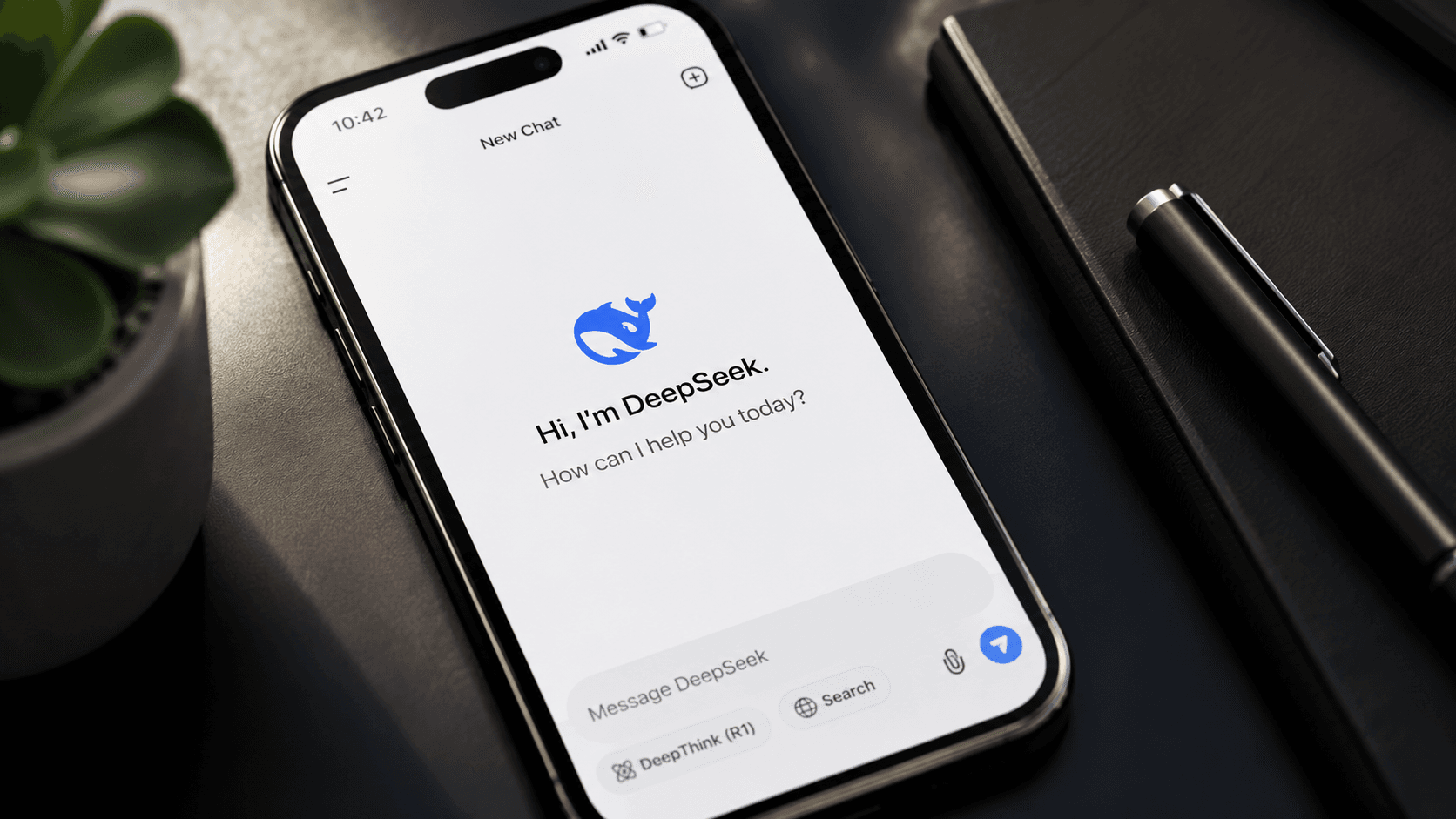
DeepSeek and Moonshot AI trained their latest models heavily on outputs from OpenAI's GPT-6 Astra, The Information reported Wednesday, citing people with direct knowledge of the matter. The two Chinese labs' newest releases, Moonshot's Kimi K3.1 Pro and DeepSeek's V4.1-Flash 1017, reportedly benefited from the practice, known as distillation. The report describes Astra as the top distillation target for China's AI labs.
Both models are recent. DeepSeek launched V4.1-Flash 1017 on October 17, and Moonshot released Kimi K3.1 Pro the week before the report landed.
Distillation trains a "student" model to imitate the answers of a stronger "teacher" model. Labs use it routinely to build smaller, cheaper versions of their own systems. It becomes contested when the teacher belongs to a competitor, because the student can pick up advanced capabilities without the full cost of the original research.
Key facts
- 01DeepSeek and Moonshot AI relied heavily on OpenAI's GPT-6 Astra outputs to train their latest models, The Information reported.
- 02The models named are Moonshot's Kimi K3.1 Pro and DeepSeek's V4.1-Flash 1017, which launched October 17.
- 03In a September 30 blog post, OpenAI tied a distillation campaign that began in July to individuals associated with Moonshot AI.
- 04That campaign logged 16,000 extraction requests from more than 4,000 users on July 24 and 25 alone.
- 05Anthropic says new protections cut data harvested in distillation attacks on Claude by about 90% to 99%.
The report leaves key questions open. It does not explain how Astra outputs reached either lab, and it gives no figures for the volume of outputs used, the cost, or the performance gained. It also does not establish that DeepSeek or Moonshot broke a specific contract, policy or law. OpenAI, DeepSeek and Moonshot AI did not immediately respond to requests for comment.
OpenAI has pointed at Moonshot before. In a September 30 blog post, the company said it had shut down a coordinated campaign to extract its models' hidden reasoning that began July 1, and it attributed "a core cluster of the activity to individuals associated with Moonshot AI, the developer of Kimi." On July 24 and 25 alone, OpenAI logged 16,000 extraction requests from more than 4,000 users, part of a wider cluster of over 15,000 users. OpenAI said the activity was fully disrupted by July 28.
OpenAI said those operators did not break its encryption, compromise a database or reach stored user conversations. One technique copied encrypted reasoning from one conversation and asked a model to decode it in another, a pathway OpenAI says it has since closed. The September post did not tie the campaign to a specific Moonshot model, and Moonshot did not respond to it.
OpenAI calls the practice "adversarial distillation," which it defines as "the systematic and unauthorized use of one model's outputs or reasoning to help train, reproduce, or improve another model." Anthropic, OpenAI and Google have all argued that distillation lets rivals copy advanced capabilities faster and more cheaply.
Anthropic has been tightening its own defenses. Earlier this month, the company said new measures protecting its Claude models had cut the data harvested in "distillation attacks" by about 90% to 99%.
Both Chinese labs are under scrutiny on other fronts. Moonshot is reportedly targeting a $3 billion IPO in Hong Kong at a $50 billion valuation. On October 20, the Department of Homeland Security directed federal civilian agencies to stop buying DeepSeek products and remove them from government IT systems.

Working on something we should cover, or seeing a story we missed? Send leads, documents, or feedback to hello@aichatdaily.com. For sensitive tips, see our secure tips page for Signal and PGP options.
Spotted an error? Email hello@aichatdaily.com with the URL and the issue, or read our full corrections policy.