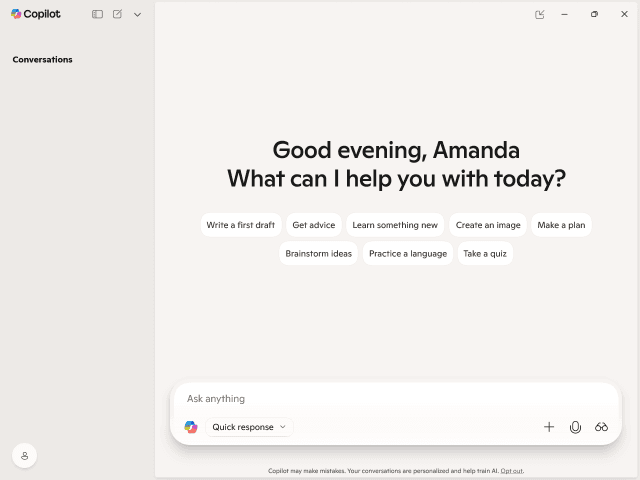
Sweden's Government Offices, Regeringskansliet, will block ChatGPT and Claude on staff work computers starting Monday, October 26, according to reporting by Swedish Radio's Ekot. Civil servants will instead be directed to Microsoft Copilot, which the Government Offices approved after reviewing the service and increasing its security.
The block covers service computers, and the reporting does not address personal phones or home devices. Not every employee loses access entirely: according to the press office, some staff will keep using ChatGPT and Claude through an AI-assistant platform that the Government Offices built itself.
The stated aim, per Ekot, is to keep staff on AI services the organization has approved. Regeringskansliet has declined to discuss with the media exactly why it is blocking the two chatbots, and its press office would not describe the changes made to Copilot's settings, citing security. The Government Offices had already restricted DeepSeek.
Key facts
- 01Sweden's Government Offices will block ChatGPT and Claude on staff work computers starting Monday, October 26, 2026.
- 02Staff will be directed to Microsoft Copilot, which Regeringskansliet approved after a review and tightened settings.
- 03Some staff keep ChatGPT and Claude access through an AI-assistant platform the Government Offices built itself.
- 04Sweden's Tax Agency and National Board of Institutional Care already block similar AI services; Kronofogden is weighing it.
- 05A Trafikverket audit this year found staff using about ten different open AI services.
Mikael Wettercrantz, the Government Offices' digitalization director, declined an interview with Ekot. In a post on the internal intranet, he wrote that using AI services without an agreement in place could have consequences for the organization's information security.
Regeringskansliet is not the first Swedish public body to draw this line. The Swedish Tax Agency (Skatteverket) and the National Board of Institutional Care (SiS) already block similar AI services, according to Ekot. The Swedish Enforcement Authority (Kronofogden) is considering the same step but had not decided when the story ran.
An audit at the Swedish Transport Administration (Trafikverket) earlier this year found staff using about ten different open AI services. Auditors flagged several examples of problematic use involving sensitive inputs and how employees handled AI-generated answers. No breach was reported, and the reporting does not identify which services or data were involved.
The decision sits alongside a broader legal review. On September 3, 2026, Sweden's Ministry of Justice appointed special investigator Lisa Englund Krafft to examine how offentlighetsprincipen, the principle of public access to official records, applies when authorities use AI and external cloud services. Her report is due November 15, 2027, and the government has not tied that inquiry to the Government Offices' block.
Swedish agencies have otherwise been expanding their use of AI. A Ministry of Finance summary of reports from 25 agencies in October 2025 found them actively exploring the technology, many at an early stage. The Swedish Post and Telecom Authority ran Copilot and ChatGPT pilots under strict information-handling guidelines, and Kammarkollegiet tested both tools before rolling out digital assistants to all employees.
The National Institute of Economic Research, in its own assessment, rated the information-security risk of tools such as Copilot as very low.

Working on something we should cover, or seeing a story we missed? Send leads, documents, or feedback to hello@aichatdaily.com. For sensitive tips, see our secure tips page for Signal and PGP options.
Spotted an error? Email hello@aichatdaily.com with the URL and the issue, or read our full corrections policy.