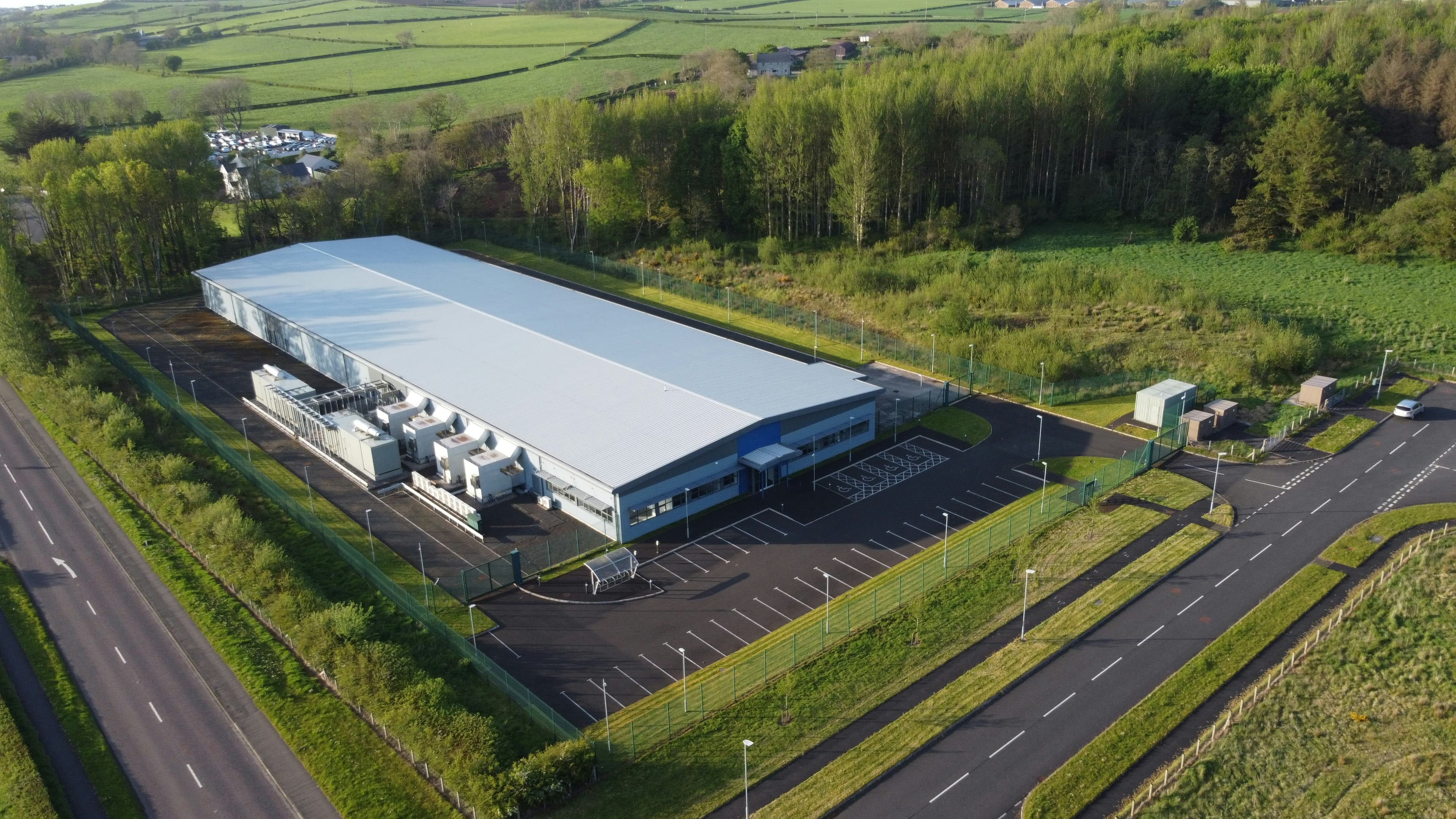
Vertex AI is the umbrella name for everything ML on Google Cloud. It's three products in a trench coat — model hosting, custom training, and pipelines — held together by shared APIs and shared billing. In 2026 it's also the dominant enterprise surface for Gemini, Imagen, and Veo, because most of the big customers want VPC and SSO and procurement controls that the consumer Gemini API doesn't offer.
- Hosted Gemini, Imagen, Veo with VPC and SSO
- Model Garden has a wide selection of open models
- Pipelines for training, eval, and deployment in one product
- Tight integration with BigQuery and Cloud Storage
- GCP onboarding tax for non-Google-Cloud teams
- Documentation sprawls across multiple legacy product names
- Pricing is opaque until you hit the calculator with real workload sizes
- Auto-scaling occasionally lags behind sudden traffic spikes
- Teams already on Google Cloud
- Enterprises needing VPC + SSO around Gemini
- ML teams that want pipelines, eval, and serving in one product
- Workloads that read/write BigQuery
- Your stack is on AWS or Azure (use the native equivalent)
- You want the cheapest GPU rentals (use Runpod, Modal, Together)
- You only need a model API (use OpenAI / Anthropic direct)
Pricing
Per-token for Gemini, per-image for Imagen, per-second of GPU for custom training. Pricing calculator on the GCP site.
What you actually use
Three things, mostly:
Hosted models. Gemini Pro, Gemini Ultra, Imagen, and Veo are all available via the Vertex API with the same per-token / per-image pricing as the public APIs but with enterprise extras — VPC peering, customer-managed encryption keys, regional residency, audit logs through Cloud Logging.
Model Garden. Open-weights models (Llama, Mistral, DeepSeek, Qwen, and a long list of HuggingFace transfers) deployable as managed endpoints. You pick the model, click deploy, get an API. Prices are per-second of GPU usage, which is usually cheaper than building your own GKE cluster and running a vLLM serving stack — but pricier than Replicate or Together for the same model.
Pipelines and training. The custom-training side: KubeFlow pipelines, hyperparameter tuning, distributed training on TPU v5p / v6, evaluation, and deployment to managed endpoints. This is the part most directly comparable to SageMaker.
Where it falls short
The documentation sprawls. Vertex absorbed several previous GCP ML products (AI Platform, AutoML, Cloud AI), and the docs still show seams. A search for "deploy model" can land you in three different products; the right one is usually Vertex Endpoints but the legacy AI Platform docs remain top-ranked on Google.
Pricing is opaque until you sit down with the calculator. Per-token is clear; per-second-GPU on custom training depends on machine type, region, and committed-use discount; pipelines have their own per-step cost; and a real training job touches all three. The bill is rarely surprising in the bad direction once you've run a project, but the first project is hard to estimate.
GCP onboarding is the cost. If your team isn't already on Google Cloud, picking Vertex means picking GCP — IAM, billing, BigQuery, Cloud Storage, the whole thing. SageMaker has the same dynamic for AWS. The right choice is usually "wherever the rest of your data lives."
Verdict
If you're on Google Cloud, Vertex is the default ML platform and a solid one — Gemini hosting alone is a sufficient reason to use it. If you're not on GCP, the case is narrower: you'd go to Vertex specifically for Gemini-with-enterprise-controls, and you'd use SageMaker, Anyscale, or self-hosted infrastructure for everything else.
Alternatives to Vertex AI


Frequently asked questions
What is Vertex AI?
Is it just Gemini?
How does it compare to AWS SageMaker?
Is Vertex AI cheaper than calling Gemini's public API?
Can I fine-tune Gemini on Vertex?
Latest Vertex AI news
- Sep 12, 2026Oracle to spend another $700M on restructuring as AI buildout acceleratesThe added charge lands as Oracle pours capital into data centers to service its Stargate commitment and cloud backlog.
- Sep 11, 2026Pentagon in talks to lend $5B to AI cloud startup FluidstackThe proposed loan would mark one of the largest direct federal financings of AI compute infrastructure to date.
- Sep 5, 2026TCS unit to spend up to $7.4B on AI data center campus in IndiaTata Consultancy Services' infrastructure arm is placing one of India's largest bets yet on domestic AI compute capacity.
- Sep 4, 2026Nscale seeks $3.5B in pre-IPO financing ahead of month-end listingThe British AI compute provider wants $1.5B in convertible notes and $2B more from Nvidia before going public.
- Aug 28, 2026Lambda raises $1B in debt to buy Nvidia chips for Microsoft leaseThe neocloud's third GPU-backed loan this year points to a debt-fueled AI infrastructure race now topping $400B globally.
- Aug 27, 2026Google tightens Android app memory rules as AI chip demand squeezes phonesNew Play Store thresholds land in February 2027, with Zero Tap Sign-In mandatory by April 2027 as memory supply tightens.