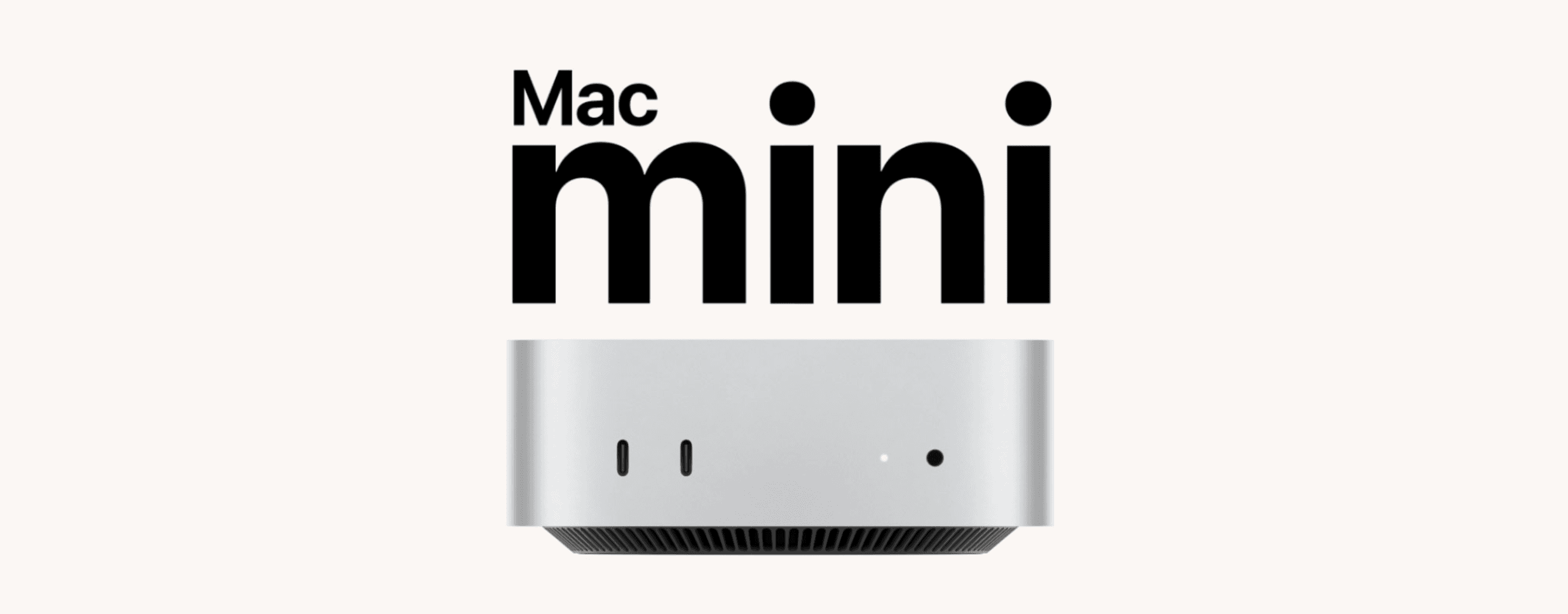
Apple cannot keep the Mac Mini in stock. On Thursday's earnings call, CEO Tim Cook told analysts it will take 'several months' to work through backorders for the compact desktop, after coders discovered the machine is an unusually good fit for agentic AI workloads. Mac revenue came in at $8.4 billion for the quarter, dwarfed as usual by nearly $57 billion in iPhone sales, but it is the smallest, cheapest Mac that has become the supply problem.
Cook framed the shortage as a demand story rather than a manufacturing one. 'On the Mac Mini and Mac Studio, both of these are amazing platforms for AI and agentic tools,' he said. 'And customer adoption of that is happening faster than we expected.' Apple has not given a unit forecast, but the base Mac Mini was entirely sold out as of last week, and MacRumors reported in early March that the 512 GB configuration had quietly disappeared from Apple's store.
The trigger, by Cook's account, is OpenClaw — the open-source agentic stack that landed earlier this year and quickly became a default way for developers to run autonomous agents locally. The Mac Mini hits a specific sweet spot for that workload: enough unified memory to host mid-sized models, a dedicated machine that is not also somebody's laptop, and a price tag well under the cost of a comparable GPU server. AI Chat Daily covered the surprise Mac demand earlier this week as Apple's Q2 numbers landed.
Key facts
- 01Tim Cook told analysts on Thursday it will take 'several months' to clear Mac Mini backorders driven by agentic AI workloads.
- 02Apple posted $8.4 billion in Mac sales this quarter versus nearly $57 billion for the iPhone.
- 03MacRumors reported in early March that Apple pulled the 512 GB Mac Mini configuration; the base model went fully sold out last week.
- 04Cook credited the open-source tool OpenClaw, launched earlier this year, for turning the Mac Mini into a preferred local AI machine.
- 05Cook will hand the CEO role to hardware chief John Ternus later this year, stepping into an executive chairman seat.
That is a meaningful shift in who buys a Mac Mini. The product has historically been a home-server hobbyist machine and a cheap entry point into macOS for switchers. Now it is being bought as inference hardware, a category Apple has never really marketed into and which sits awkwardly next to Nvidia's data-center pitch. The Mac Studio, the Mini's bigger sibling, is in the same conversation.
“Mac sales hit $8.4 billion this quarter against nearly $57 billion in iPhone sales, but it is the Mac Mini — a sliver of the Mac line — that Apple cannot keep on shelves.”— Jaeden Schafer
The iPhone side of the report had its own supply story, but a different one. Cook said iPhone 17 demand has been 'super high' while sales came in below expectations because Apple cannot get enough of the advanced chips that power the phones. So Apple is now constrained on two product lines for two different reasons: silicon scarcity on the iPhone, and AI-driven demand on the Mac.
There is also a new wrinkle in the Mac line. Cook pointed to the MacBook Neo — Apple's more colorful, more affordable laptop — as another contributor to Mac shortages this quarter. Between the Neo on the consumer side and the Mini on the developer side, Apple is short on both ends of the Mac portfolio at the same time, which is rare for a company that prides itself on operational forecasting.
Cook used the call to formalize the leadership handoff first telegraphed earlier this year. He will move into an executive chairman role later this year, with hardware engineering chief John Ternus taking the CEO seat. Cook called it the 'right moment' to step aside, citing Apple's financial position and what he described as an 'incredible' product road map. He praised Ternus as a 'person of remarkable character and a born leader.'
Ternus joined the call briefly to vouch for Cook and to tell investors he would bring a similarly deliberate approach. Neither executive offered specifics on the road map they kept gesturing at, which is standard for Apple but notable given how much of the AI conversation is now happening on Apple silicon without Apple's direct participation. The Mac Mini boom is, in effect, third-party developers deciding what Apple's AI hardware strategy is.
The skeptical read is that this is a small, transient bump dressed up as a strategic story. Mac Mini unit volumes are a fraction of a Mac line that is itself a fraction of iPhone revenue, and OpenClaw enthusiasm could cool as cloud inference prices keep falling. Apple has not disclosed how much of the $8.4 billion in Mac revenue came from AI buyers versus ordinary upgrades, and 'several months' of backlog can evaporate quickly once a supplier catches up.
Still, the shape of the demand matters more than the dollar amount. Apple has spent two years being told it is behind in AI, mostly because Apple Intelligence has been slow and uneven. The Mac Mini shortage is the first clean signal that developers are voting with purchase orders for Apple silicon as an AI substrate, separate from anything Apple itself ships in software. If Ternus inherits a company where the Mac quietly becomes the default local-AI box for a generation of agent builders, that is a more durable position than another Siri refresh — and it happened largely without Apple's marketing department noticing.

Working on something we should cover, or seeing a story we missed? Send leads, documents, or feedback to hello@aichatdaily.com. For sensitive tips, see our secure tips page for Signal and PGP options.
Spotted an error? Email hello@aichatdaily.com with the URL and the issue, or read our full corrections policy.