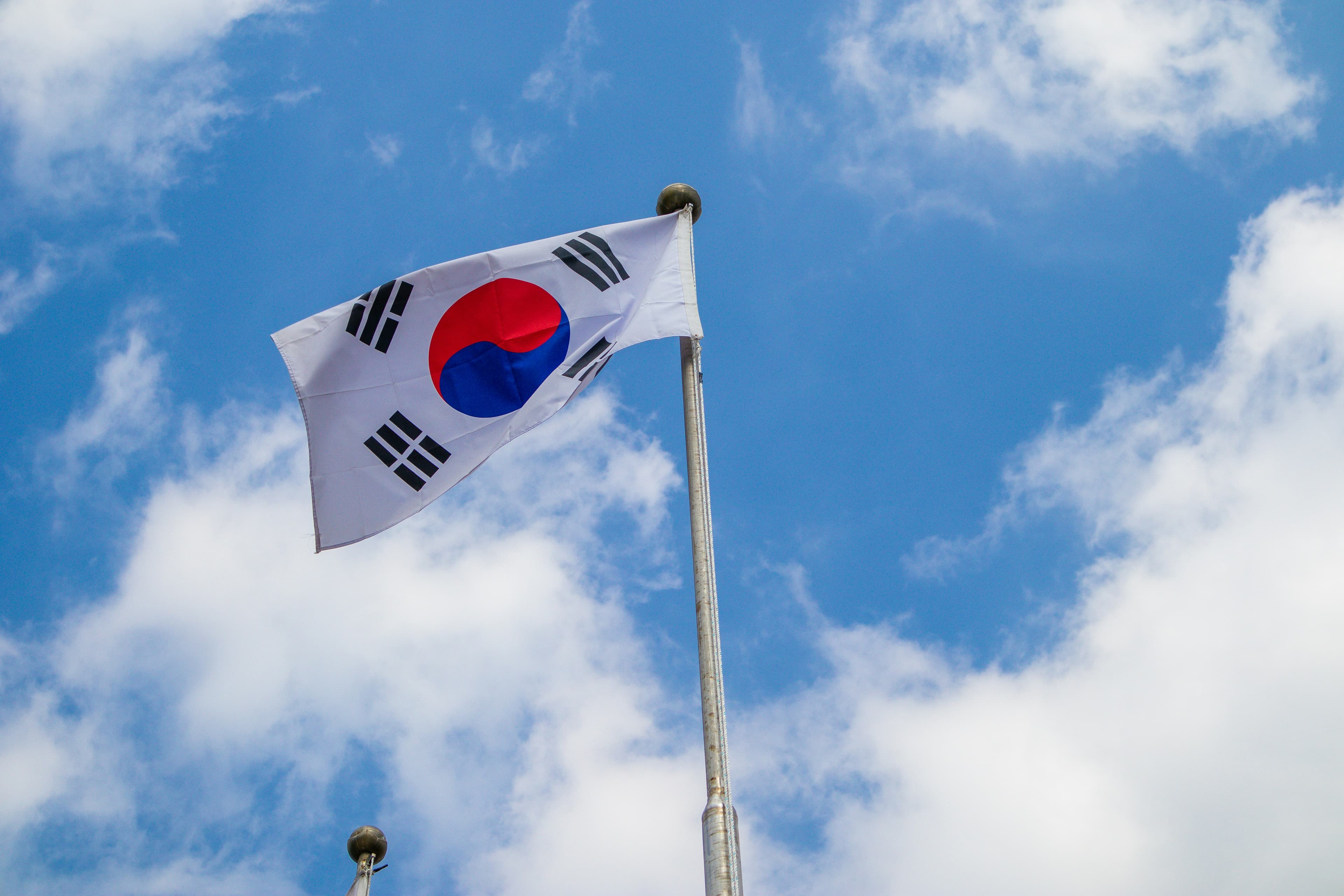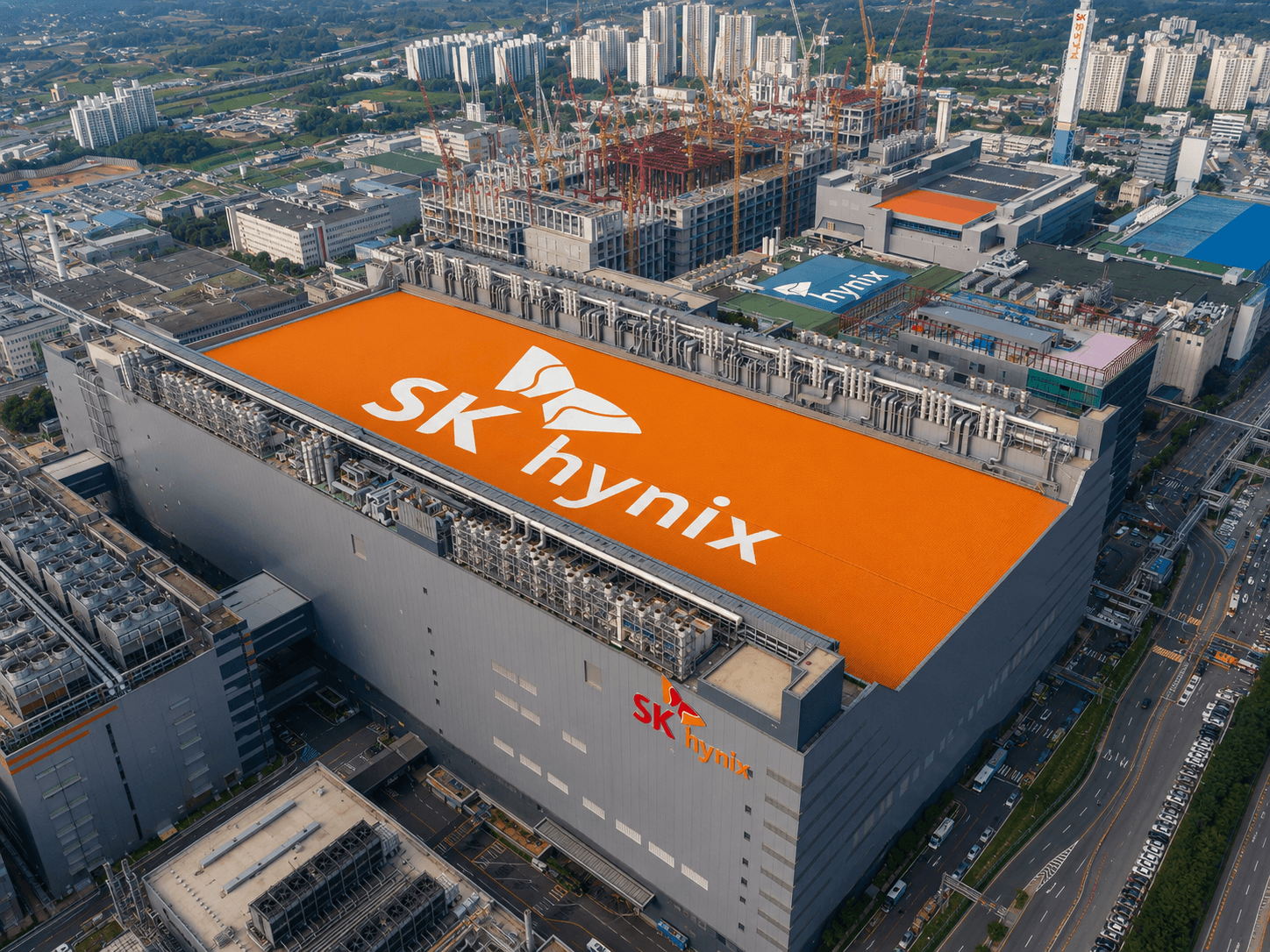
South Korea unveiled a national investment plan on Monday that commits more than $900 billion across semiconductors, AI data centers, and physical AI, with Samsung and SK Hynix anchoring a $518 billion (~800 trillion won) buildout of four new memory fabs in the country's southwest. A separate $52 billion is earmarked for a high bandwidth memory packaging hub in the central region, and $356 billion (550 trillion won) more will fund AI data centers through 2035. The chairmen of Samsung and SK Hynix attended the presidential briefing where the plan was announced.
The scale is calibrated against US hyperscalers. Alphabet, Amazon, Meta, and Microsoft will collectively spend roughly $650 billion on AI infrastructure this year alone, per Reuters. South Korea is now committing nearly 40% more than that, spread over a decade, in a bet that memory and packaging capacity, not just model training compute, will be the chokepoint of the AI cycle.
Samsung and SK Hynix, along with US-based Micron, are already running flat-out against what the industry has dubbed RAMageddon — a worldwide memory shortage driven by AI servers consuming HBM faster than fabs can produce it. Adding four new memory fabs is a direct response to that shortage rather than a speculative bet on future demand.
Key facts
- 01Samsung and SK Hynix will spend $518 billion (~800 trillion won) on four new memory fabs in southwestern South Korea.
- 02An additional $52 billion is earmarked for an HBM packaging hub in the central region.
- 03Korean tech and energy firms will spend $356 billion (550 trillion won) on AI data centers through 2035.
- 04Samsung pledged 2,655 trillion won (~$1.7 trillion) over the next decade, with 425 trillion won earmarked for the Honam region.
- 05SK Group set a 2,100 trillion won (~$1.4 trillion) roadmap, including 1,000 trillion won for AI data centers and 15 GW of capacity led by SK Telecom.
Samsung published its own release Monday detailing 2,655 trillion won (~$1.7 trillion) of investment over the next decade. Of that, 425 trillion won is earmarked for the Honam region in the southwestern corner of the peninsula. The company cited expected incentives around power, water, workforce, and living conditions as key factors in selecting Gwangju, roughly 300 kilometers south of Seoul, for a new semiconductor fab, alongside an AI data center in Haenam at the southern tip.
SK Group announced a parallel 2,100 trillion won (~$1.4 trillion) medium- to long-term investment roadmap. The split: 1,100 trillion won to expand semiconductor production capacity and 1,000 trillion won for AI data centers nationwide. SK Hynix is central to the chip side, while SK Telecom will lead a buildout of 15 gigawatts of AI data center capacity across the country.
President Jae Myung Lee framed 2026 as the year South Korea must establish itself as an "irreplaceable" industrial power. He said existing chip facilities in Yongin and Pyeongtaek, the heart of the country's semiconductor belt just south of Seoul, have "already reached their limits," and pushed companies to accelerate investment in the southwest to spread industrial activity beyond the capital region.
“We must secure overwhelming production capacity in advance”— Jae Myung Lee, President of South Korea
Lee also pushed back against media reports that the government had pressured companies into the investments, saying the decisions reflected the companies' own judgment. "The government's role is to invest its capabilities so that companies can invest without losses and with better prospects," he was quoted as saying. The framing matters because of how the plan will be financed: incentives, not directives.
The siting choice carries its own logic. Yongin and Pyeongtaek are saturated on power and water, and Gwangju and Haenam offer cheaper land and untapped grid capacity. Spreading fabs and data centers south also distributes industrial risk away from a single concentrated cluster — a concern that has grown sharper as memory has become a strategic asset.
Execution is the open question. Fabs take years to build, and the demand signal that justifies them today — HBM scarcity, AI training buildout, hyperscaler capex — runs on a much shorter cycle than concrete and EUV tooling. The memory industry has historically swung between shortage and glut on roughly 18-month rhythms, and a coordinated $518 billion capacity addition is the kind of move that can flip the cycle. If AI demand keeps absorbing every HBM stack produced, Samsung and SK Hynix will look prescient; if not, the back half of the decade could see crashing memory prices and stranded fabs.
The China and Taiwan dimension is the other variable. CXMT just signed a $3 billion supply deal with Tencent, and Chinese memory players are scaling DRAM and HBM-adjacent products faster than expected. South Korea's bet is that locking in HBM packaging and advanced-node memory at this scale keeps Samsung and SK Hynix structurally ahead of any catch-up attempt.
What this plan really is, stripped of the political framing, is an industrial-policy answer to the question every AI company is asking: who builds the memory. The US is concentrating on logic chips, advanced packaging via TSMC Arizona, and data center compute. South Korea is concentrating on the memory layer, where Samsung and SK Hynix already control the majority of global HBM supply. If the fabs come online on schedule, the country isn't just defending its lead — it's pricing in a world where every frontier model, every hyperscaler, and every sovereign AI program runs through Korean memory.

Working on something we should cover, or seeing a story we missed? Send leads, documents, or feedback to hello@aichatdaily.com. For sensitive tips, see our secure tips page for Signal and PGP options.
Spotted an error? Email hello@aichatdaily.com with the URL and the issue, or read our full corrections policy.