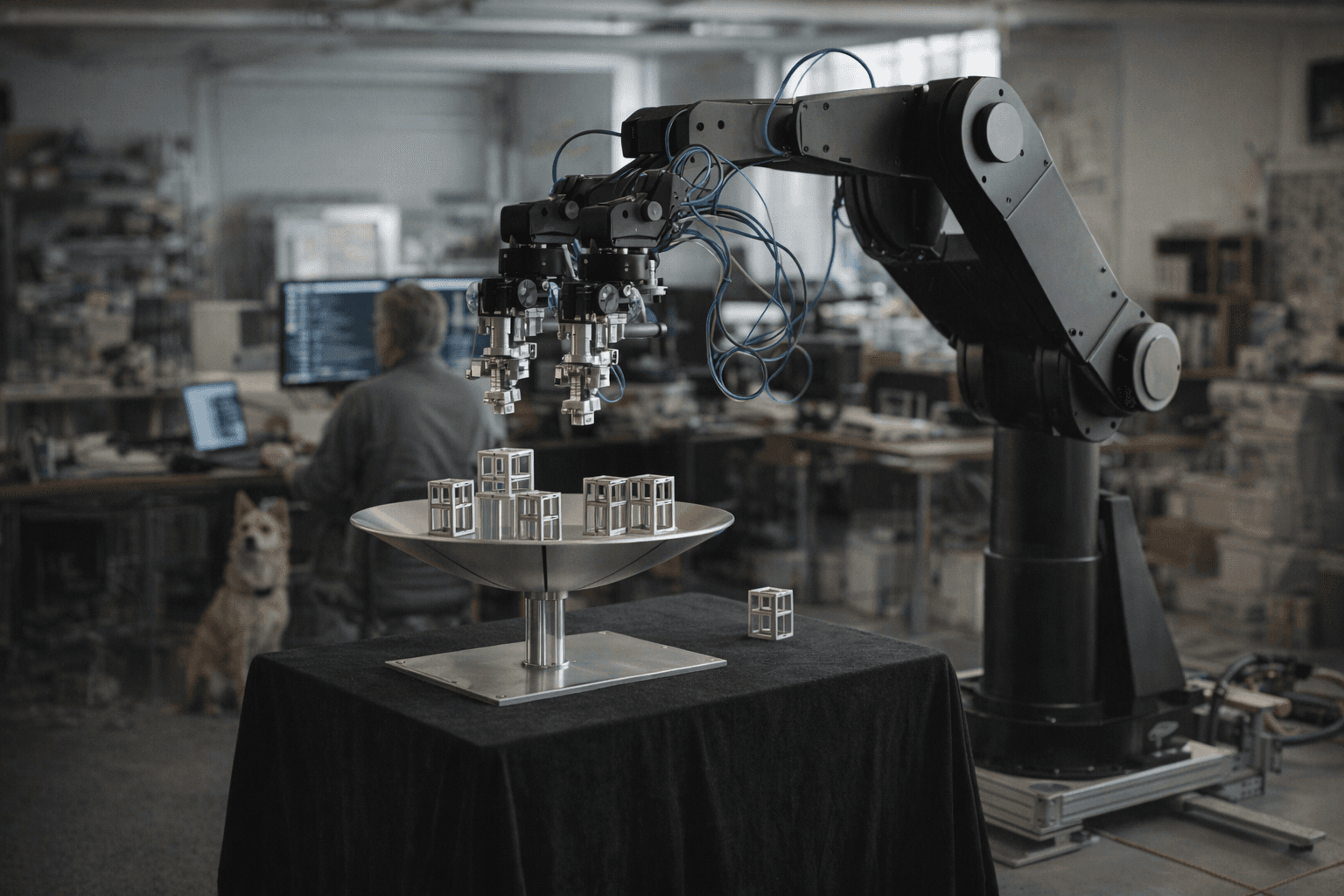
Genesis AI, a French robotics startup backed by former Google CEO Eric Schmidt, unveiled Eno, a general-purpose humanoid robot that abandons most of what makes a robot look human. No head. No legs. A wheeled base that folds down like a deck chair. The pitch from Genesis AI is that human capability, not human appearance, is the design target.
The company's framing is a direct shot at the dominant humanoid-robot template — the bipedal, head-and-torso machine pursued by Figure, Tesla, Agility, 1X, Apptronik and a growing list of Chinese entrants. Genesis argues that copying the human form factor is a constraint, not a feature, when the goal is to do useful work in factories, warehouses and labs.
“humanoid robots don't need to look human”— Genesis AI, French robotics startup
One part of Eno is still very human: the hands. Genesis says the manipulators are built to 'exactly match the form and function of human hands' so the robot can pick up tools, instruments and objects already designed for people. That keeps Eno compatible with the existing physical world — assembly fixtures, lab pipettes, hotel cleaning carts — without requiring customers to retool every workspace around a new machine.
Key facts
- 01Genesis AI, a French startup backed by former Google CEO Eric Schmidt, unveiled Eno, a general-purpose robot that drops the conventional humanoid silhouette.
- 02Eno may have no head, no legs, and can sit on a wheeled base that folds down like a deck chair.
- 03The robot's hands are designed to 'exactly match the form and function of human hands' so it can use tools built for people.
- 04Genesis plans production and targeted customer deployments by the end of 2026, starting with manufacturing, labs and logistics.
- 05Hospitals, hotels and consumer markets are next, with additional robot 'embodiments' already in development.
The wheeled base is the more interesting break from the pack. Bipedal locomotion is expensive in compute, battery life and reliability, and most real-world commercial environments — factory floors, hospital corridors, hotel back-of-house — are flat. A wheeled platform that folds away when not in use sidesteps the hardest unsolved problems in humanoid robotics while preserving the upper-body dexterity that matters for actual tasks.
Genesis says it plans to begin production and targeted customer deployments by the end of 2026. The initial verticals are manufacturing, laboratories and logistics, followed by hospitals, hotels and eventually consumers. The company also says 'additional embodiments' are in development, suggesting Eno is the first form factor in a planned family rather than a single product bet.
Schmidt's involvement places Genesis inside a small group of European robotics startups attracting serious US capital as the humanoid race accelerates. The former Google CEO has been an active investor across AI infrastructure and applied AI, and his backing gives Genesis a credibility signal in a market where most attention and funding has flowed to US and Chinese teams. France, home to a deep robotics and industrial-automation research base, has lagged the US in raw funding but has produced strong applied teams.
What Genesis has not yet shared is the data that matters most: price, payload, battery life, task autonomy, and any benchmark of how the robot performs against the bipedal alternatives on real work. The general-purpose claim is the same one made by every humanoid startup in the market, and so far no commercial deployment at scale has validated it. Eno's headless, wheeled design may be more honest about current capabilities, but it has to clear the same bar: doing useful, repeatable work cheaper than the human it replaces or augments.
Skeptics will note that the humanoid-robot field is years into hype cycles that have not yet produced a profitable commercial deployment. Folding laundry, the canonical demo task, remains hard. Manufacturing customers want uptime and integration, not novelty form factors. Whether 'designed around human capability' translates into a robot that meaningfully outperforms a $30,000 industrial cobot on a factory line is the question Genesis has to answer in 2026 with actual deployment data, not renders.
Eno is worth watching because it reframes the design question the rest of the humanoid market has been afraid to ask. If the most valuable part of a humanoid robot is the hands — the interface to a world built for people — then the legs, the head and the torso are optional cost centers. Genesis is betting that customers paying for productive work in factories and labs will pick the cheaper, more reliable machine over the one that walks. If that bet lands, the next generation of 'humanoid' robots may not look humanoid at all.

Working on something we should cover, or seeing a story we missed? Send leads, documents, or feedback to hello@aichatdaily.com. For sensitive tips, see our secure tips page for Signal and PGP options.
Spotted an error? Email hello@aichatdaily.com with the URL and the issue, or read our full corrections policy.